
What is Oak Wilt?
Oak wilt is a harmful fungus that can kill oak trees, especially red oaks, in just a few weeks to months. It spreads in two main ways:
-
Aboveground: Small sap beetles transfer fungal spore pads from recently infected trees to trees with fresh wounds caused by pruning or storm damage.
-
Belowground: The fungus can travel through connected roots from one oak to another. It can move through oak root systems at a rate of up to 90 feet per year belowground, creating bull’s-eye “epicenters” of dead and dying oaks.

Diagram of root grafts transmitting oak wilt from infected oak to healthy oak. Courtesy of russelltreeexperts.com/arbor-ed/the-oak-wilt-defense.
Oak wilt has been documented in five Ottawa County parks: Rosy Mound, Riley Trails, Grand Ravines, North Ottawa Dunes, and Hiawatha Forest. Management strategies are being implemented at all known locations to reduce or stop the spread of this disease.
Red Oaks vs White Oaks
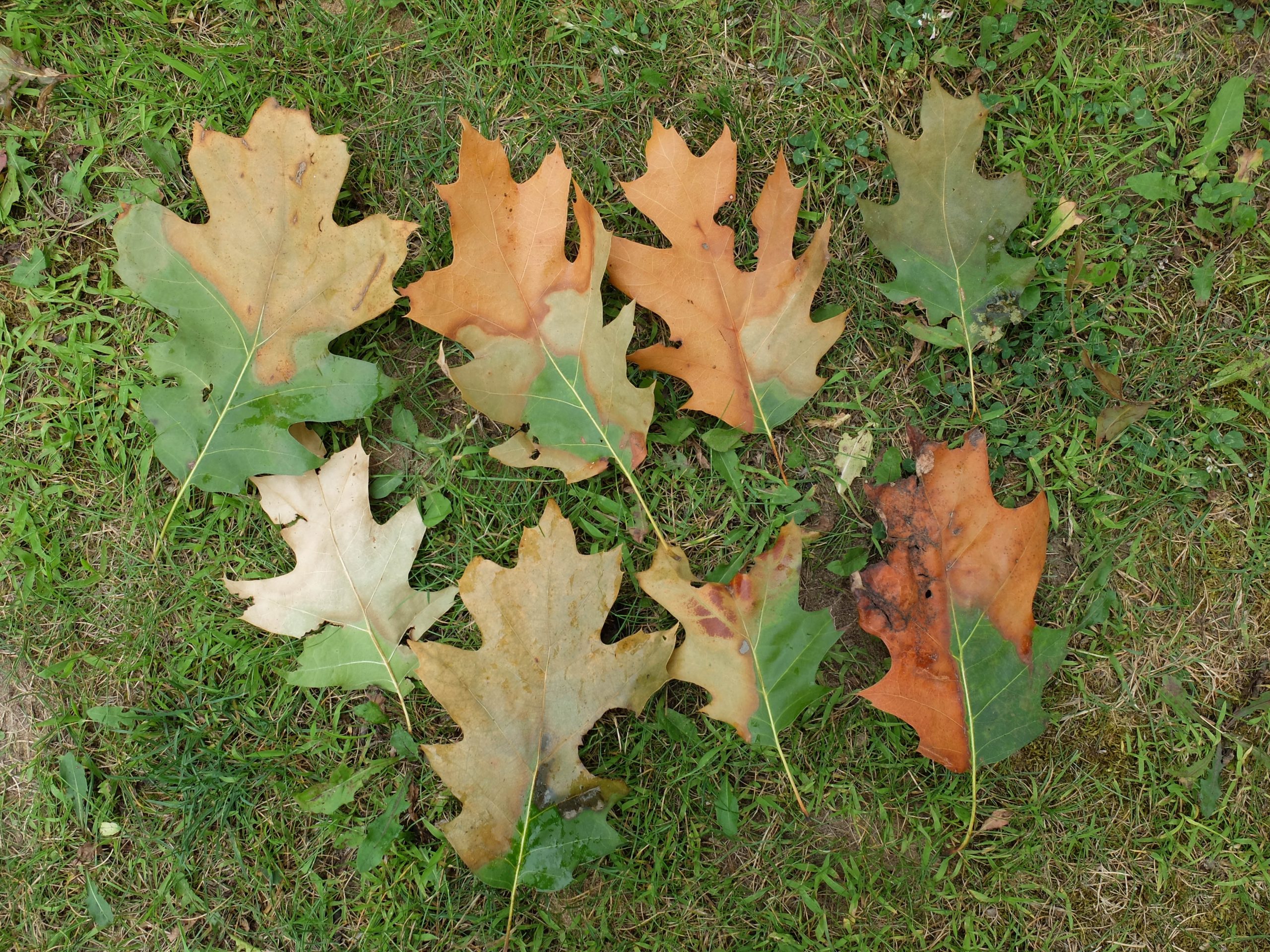
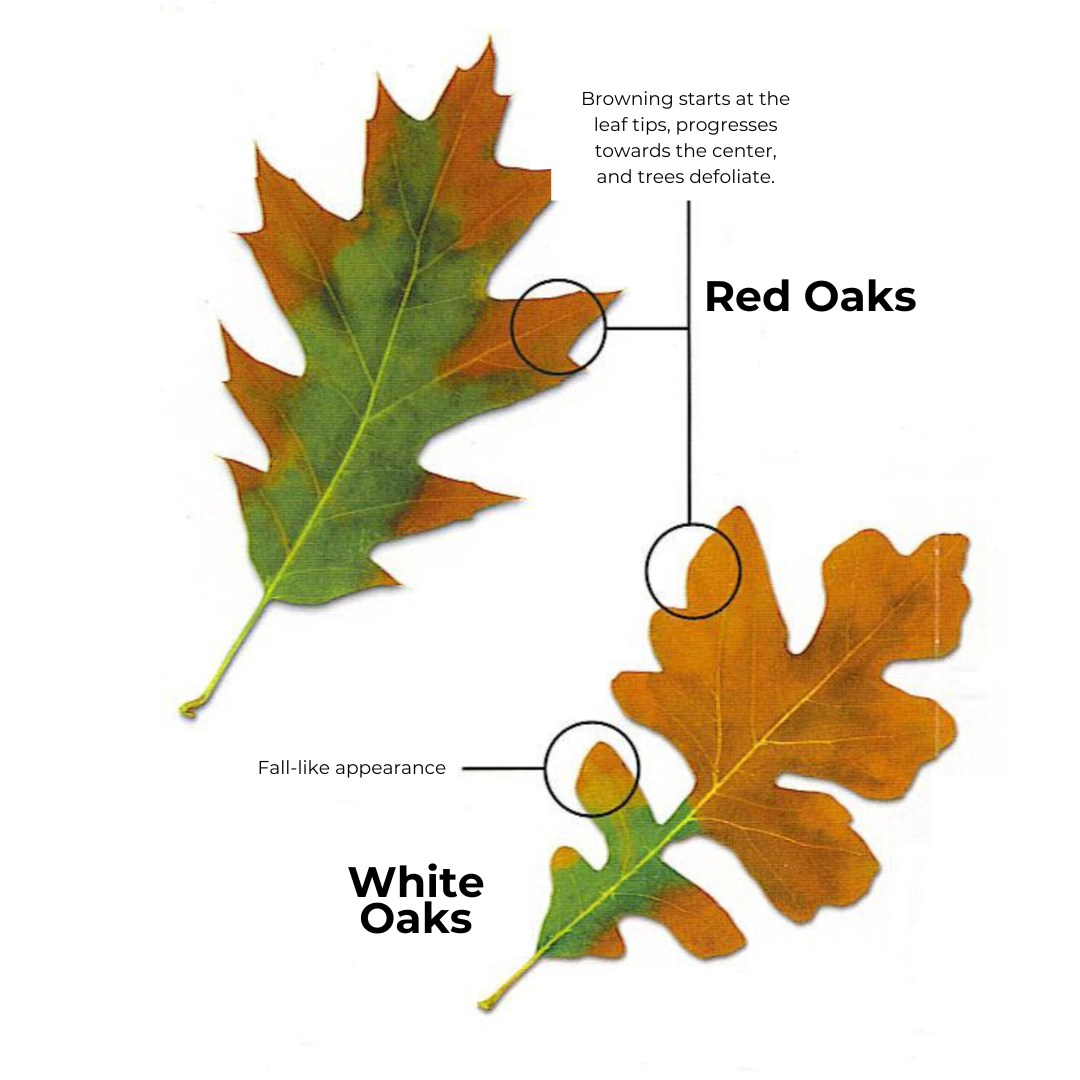
- Red Oaks – This group includes Red Oak, Black Oak, and Pin Oak. They are very vulnerable to oak wilt. Symptoms appear between July and late October, starting with browning leaves at the tips that spread toward the base. Leaves often drop all at once, creating a “half green, half brown” look, sometimes called “fall in July.”
- White Oaks – This group includes White Oak, Swamp White Oak, and Bur Oak. They are less vulnerable because their cambium can form physical barriers that slow fungal spread.
Why Oak Wilt Matters?
If not managed, oak wilt can kill a majority of oaks in the area and cause serious problems, including:
-
Loss of wildlife food sources: Oaks provide food for wildlife, including squirrels, chipmunks, raccoons, turkeys, rabbits, deer, and bears.
-
Loss of caterpillar host plants: Oaks support more than 950 species of caterpillars
-
Loss of mature oaks affects the beauty of parks and neighborhoods.
-
Dead trees can become hazards near trails or buildings and removal of infected/dead trees can be very costly.
How You Can Help
-
Avoid pruning oak trees from April 15 through July 15, when the risk of infection is highest. For extra protection, it’s best to avoid pruning at any time during the growing season—from the last spring frost to the first fall frost. The safest time to prune oaks is in winter.
-
Do not move infected or unknown firewood. Oak wilt can spread by the movement of infected wood.
-
Report suspected oak wilt to the DNR, district forester, or, if observed in a county park, email ocparks@miottawa.org
Management Strategies
Our goal is to reduce or stop oak wilt in our parks. Strategies vary by site depending on oak density, natural barriers, and other factors:
- Stopping underground spread:
Oak wilt can move through roots. We can stop it by creating a barrier underground:-
Root treatment: Girdle and herbicide all oaks near infected trees. This creates a “dead zone” that the fungus can’t cross.
-
Trench: Dig a 5-foot-deep trench around the infected area, including all nearby oaks. This breaks root connections and keeps the fungus from spreading.
-
-
Stopping aboveground spread:
The fungus can also spread through spore pads on infected trees. To manage this:-
Remove trees infected within one year.
-
Either chip them to destroy spore pads or remove the bark and cover them so beetles can’t access the fungus.
-
- Fungicides can save high-value oaks not yet showing symptoms within root grafting distance of infected oaks. The fungicide will not prevent underground spread through the roots but will halt the growth of the fungus and save the tree. These fungicides must be injected every two years for up to six years. This has the added benefit of preventing aboveground spore pads from forming and contributing to overland spread.
- For single infected oaks, either stump-pulling or girdling and herbiciding the tree as soon as flagging is detected may eliminate an infection before it spreads to the root system.
-
Early detection: Drones are used to monitor parks for dying pockets of oaks, allowing for rapid response.
Example at Rosy Mound: A trench was dug around an outbreak south of the trail, and fungicides were injected into selected oaks along the trail and within the outbreak center to protect high-value trees.
Glossary
- Spore Pads: Fungal structures on infected oaks that produce spores.
- Epicenter:The central area of infection where oak wilt spreads through interconnected roots, creating a progressively expanding pocket of dying and dead oaks.
- Root Grafting: The natural underground connection between the roots of two or more oak trees, which allows nutrients, and in the case of oak wilt, fungal pathogens, to move between trees.
- Cambium: A thin, cylindrical layer of living tissue in the stems and roots of plants that produces new cells for growth, including bark and wood.
- Girdling: The removal of a ring of bark and cambium around a tree trunk or branch, which interrupts nutrient flow.
- Fungicide Injection: The application of chemicals directly into a tree to stop fungal growth.