
September 5, 2026 – Banding Event
Written by Mike Bishop, Master Bander
We had a terrific morning at Ottawa Sands County Park with the second year of fall migration banding. Last year’s (2025) September banding was on the 6th and we only had a total of 19 captures of 10 species. This year we had a total of 48 captures of 18 species of which 46 were new birds, 1 was a recapture and 1 was unbanded. Quite a difference from last September! No complaints here!
The unbanded bird was a Ruby-throated Hummingbird. Since I don’t have a permit to band hummers, we simply note the age and sex and release them at the net. This one was an HY-M. The recapture was an American Goldfinch that was banded last year on 6 Aug. She was aged, last year, as an ASY. So, she is at least three years old. She also exhibited a brood patch last summer. Today she was again exhibiting a late-stage brood patch. So, she’s bred somewhere on the property at least two summers in a row. So cool that we can know that! Given the condition of her brood patch, she and hubby are probably still taking care of fledglings as she hadn’t begun her pre-basic molt.
Our warbler count was pretty impressive at nine species and 31 individuals. Although, most of them were onesies. But 19 of them were Bay-breasted Warblers! Even more impressive was the fact that all but four or five of the warblers (and several other species) were caught in one net run and almost all of those came out of one net!!
Conveniently, along with the 19 Bay-breasteds we also managed to catch a Blackpoll Warbler. This allowed us to show them side-by-side to the crowd. As these are two of the notorious “confusing fall warblers” of Roger Tory Peterson fame, it was nice to have them together for comparison.
There weren’t any species that were out of the ordinary today. But that doesn’t mean that there weren’t some that were maybe a bit more exciting than others. The Mourning, Canada and Black-and-white Warblers were big hits. As were the two Brown Thrashers and Red-eyed Vireos. A Traill’s Flycatcher had us working hard to separate it into one or the other of the two congeners that make up the complex. However, all of the various measurements only ended up contradicting one another so that we couldn’t definitively settle on Willow or Alder. Our guess, just based on looks, was Willow. But, being the good scientists that we are, we were conservative and left it a Traill’s. No amount of pleading would get it to sing.
We had some conspicuous dips. We caught nary a sparrow all day as well as no American Robins or any other thrushes – Swainson’s in particular. It’s anyone’s guess as to why.
Opening at 7, closing at 10:30, and operating six nets gave us a total of 21 net hours. With 48 captures that made our capture rate 180.95 birds per/100 nhs. That is outstanding! One can only surmise what it would have been had we been able to keep the nets open longer. However, that final net round with 30+ birds completely overwhelmed us and bird safety dictated that we turn off the faucet.
Regardless it was a great morning. And an added bonus was that we dodged the rain and the wind never became much of an issue. Plus, I find overcast skies are always better for mist-netting. So, all told, it couldn’t have been much better. As I said earlier, no complaints!
Here’s the tally below. Enjoy the rest of migration!
Mike Bishop, Mid-Michigan Bird Observatory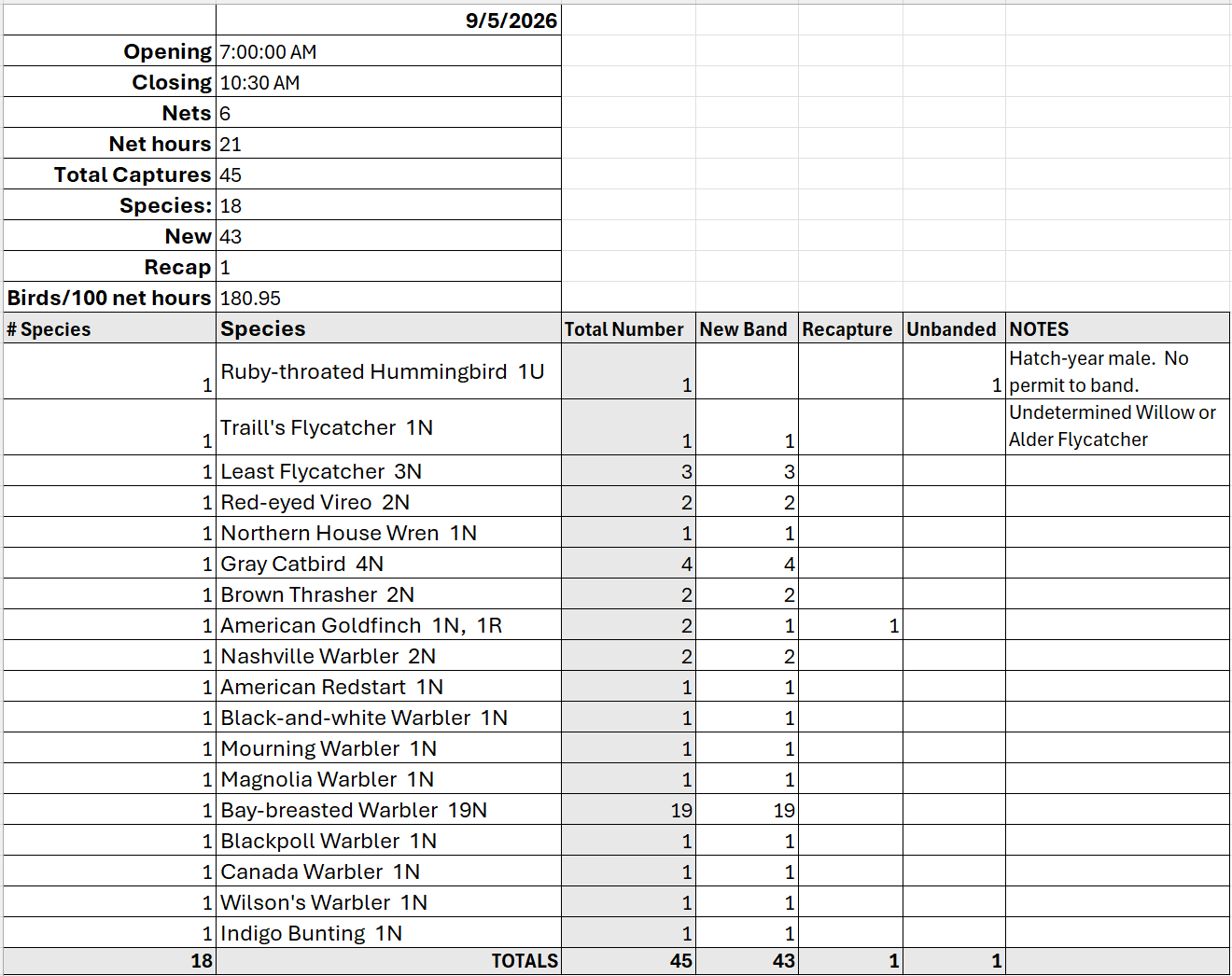
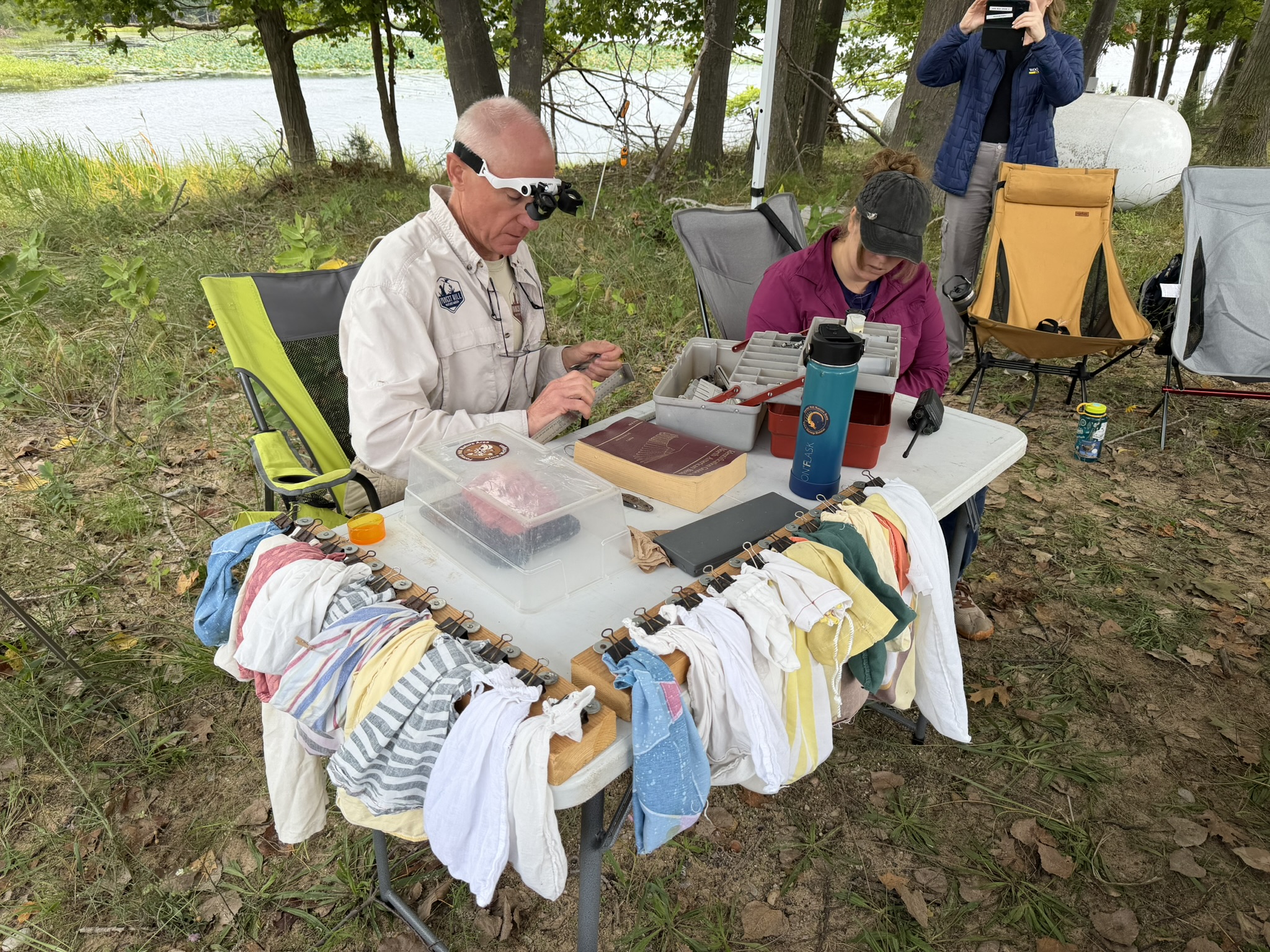 Master Bander Mike Bishop processes a bird while volunteer Jessica Sory records the data. Many birds in bags await processing.
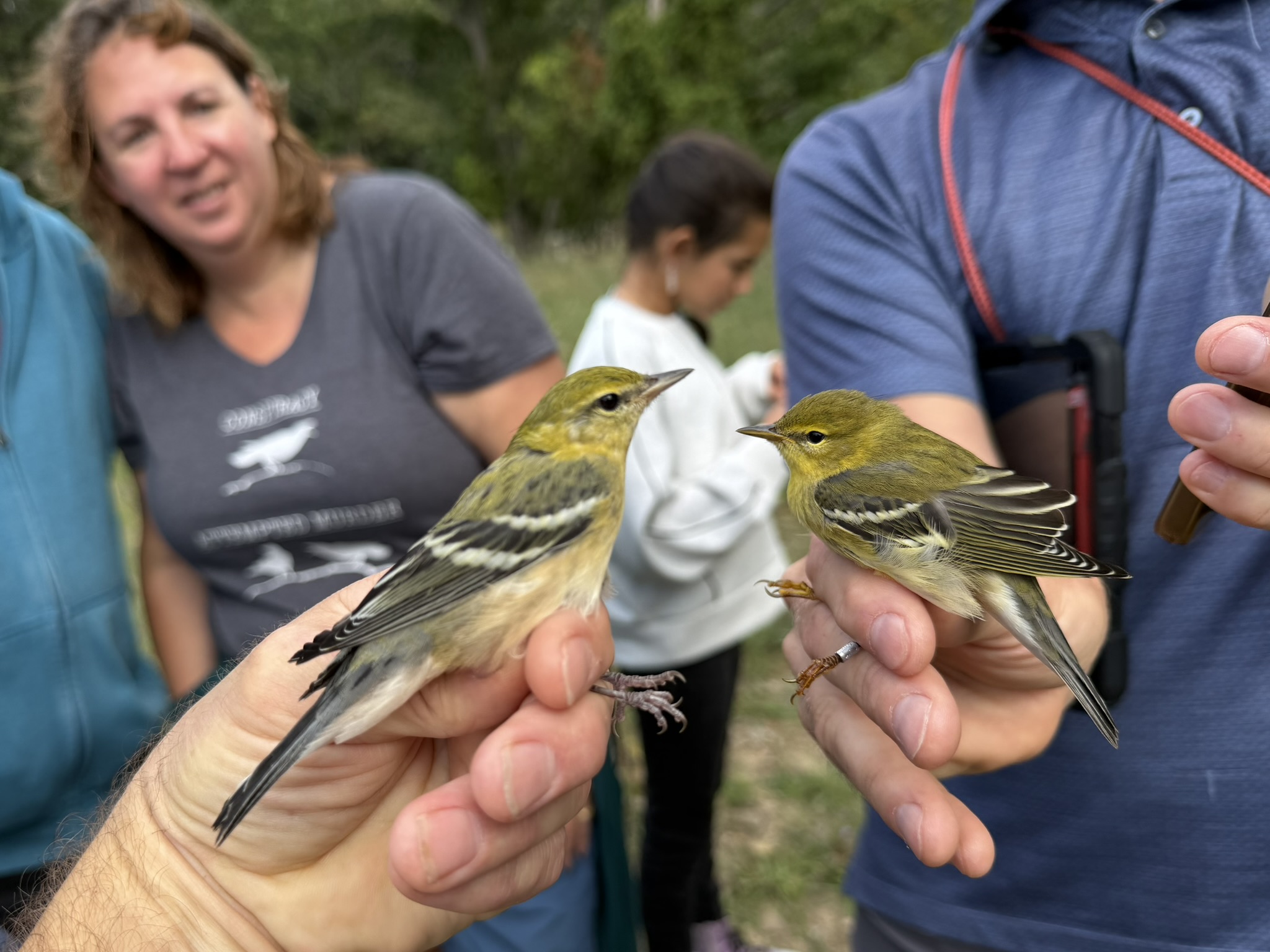 Bay-breasted (left) and Blackpoll (right) Warblers for comparison!
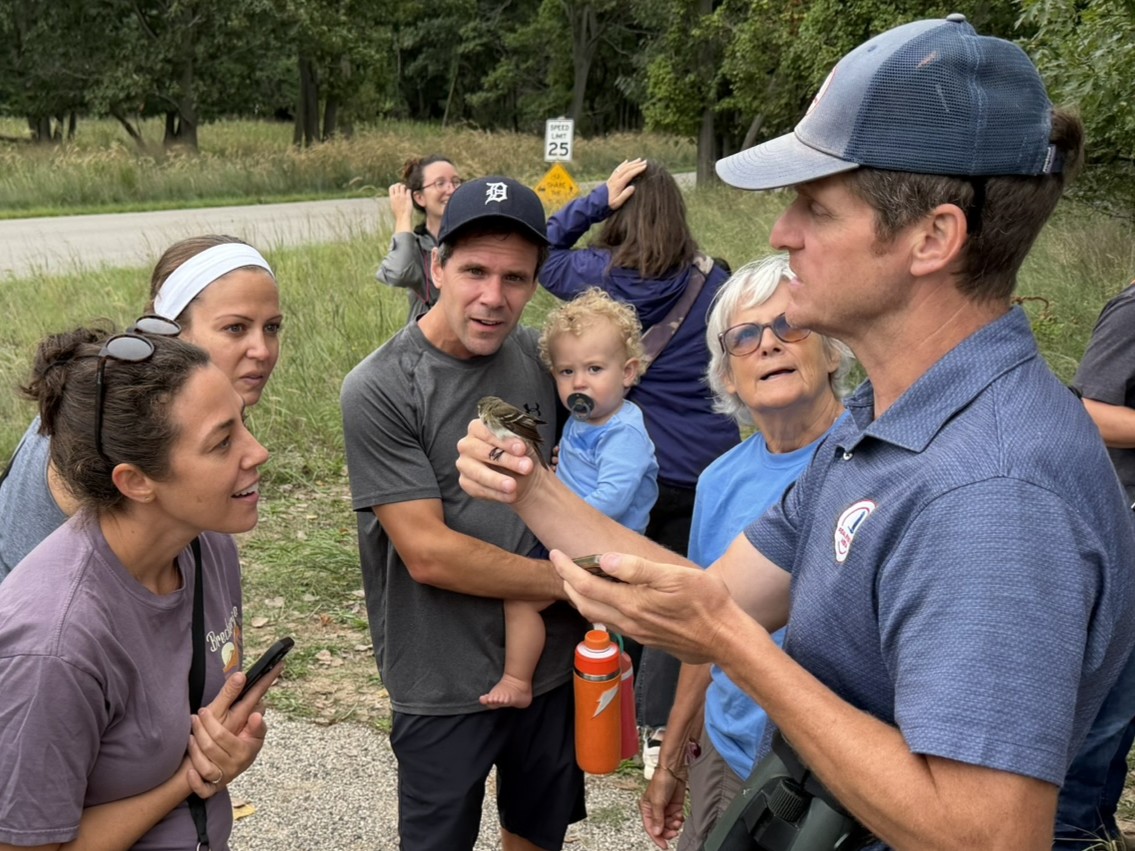 Caleb Putnam shows onlookers a Least Flycatcher.
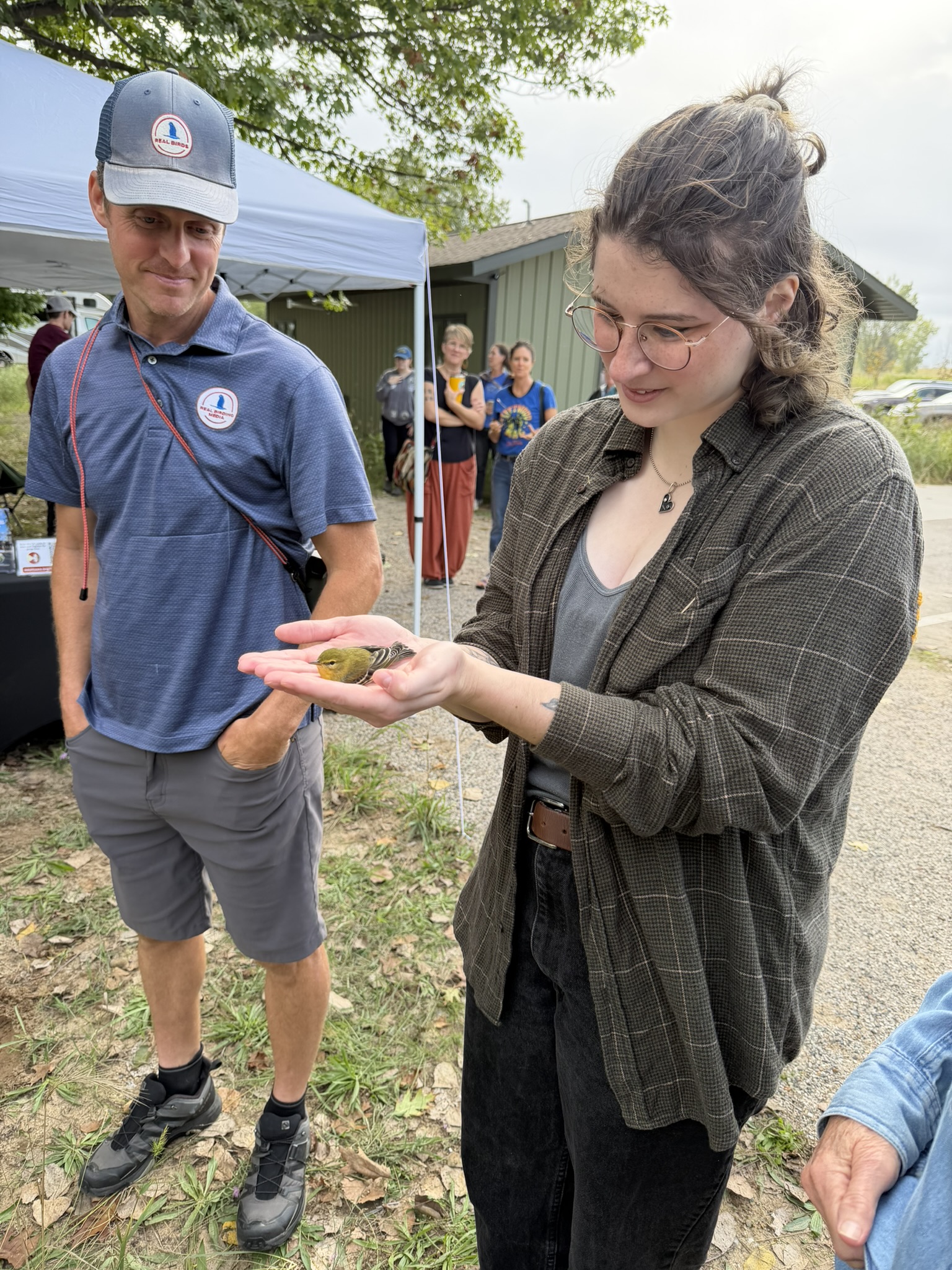 An audience member releases the Blackpoll Warbler.
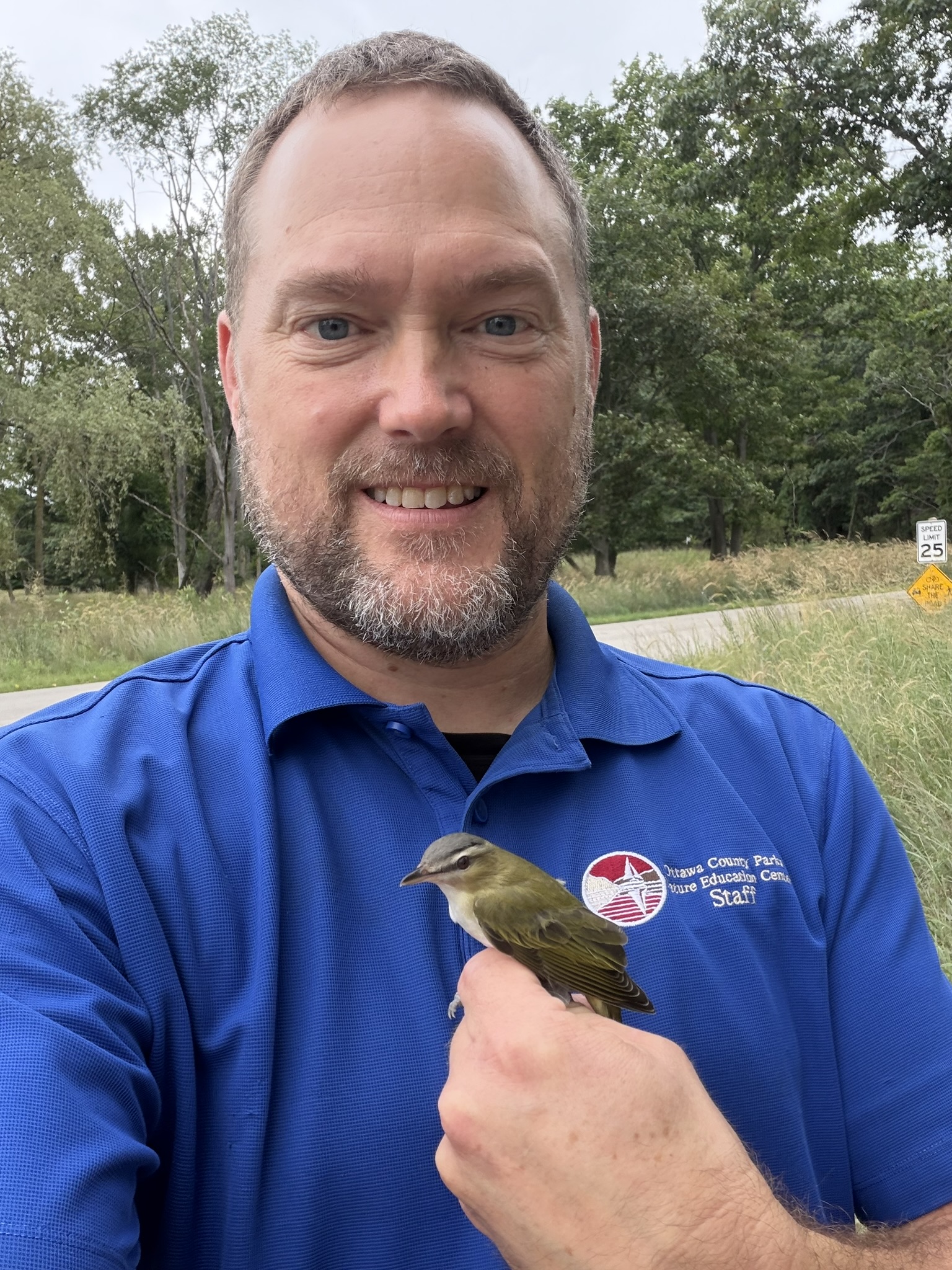 Curtis Dykstra holds a Red-eyed Vireo
May 16, 2026 – Banding Event
Written by Mike Bishop, Master Bander
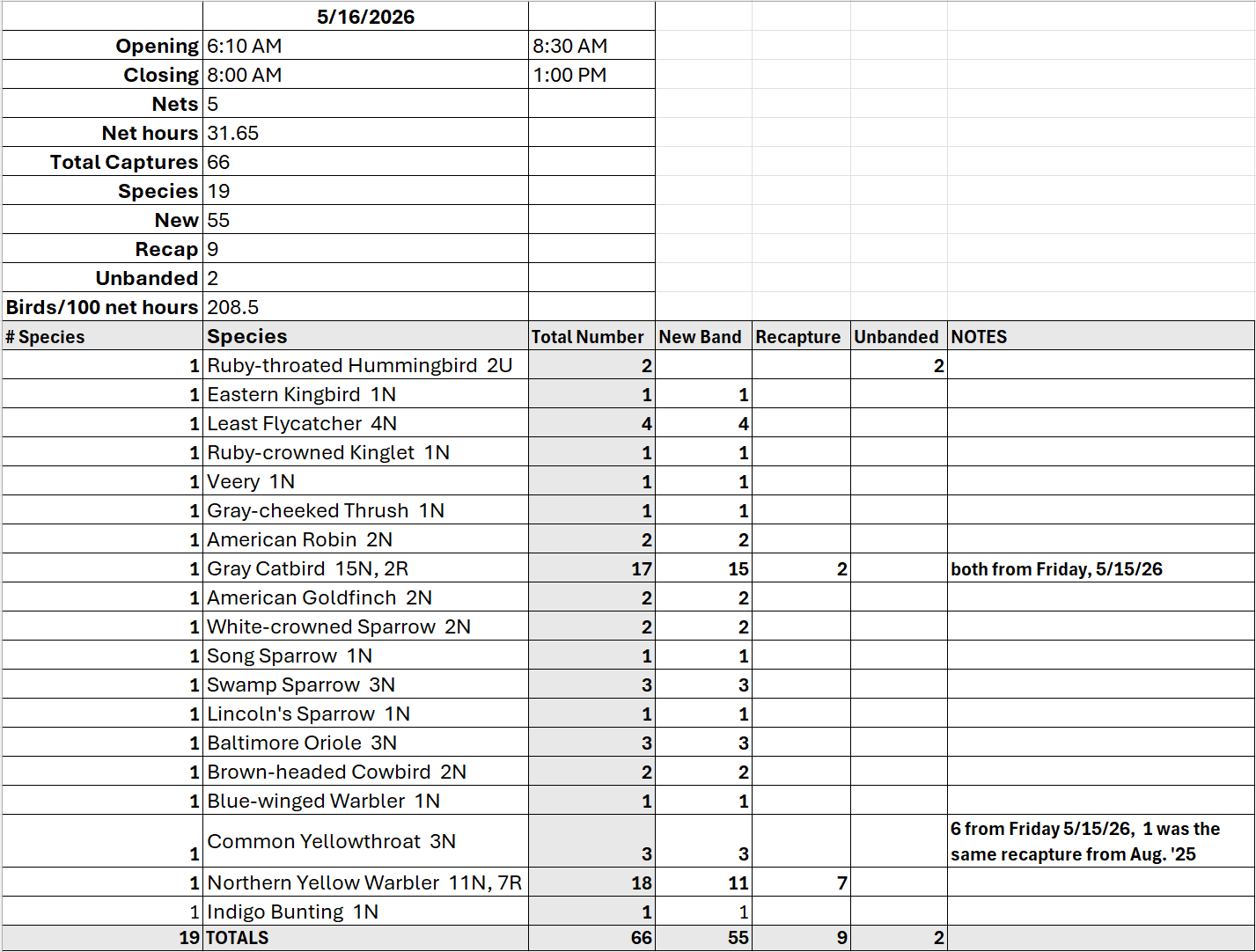
I think we all agree that it was a really successful weekend, both for the volunteers and, for the public. Despite the pathetic showing of warblers, we still had a pretty great catch of birds. Our grand total was 84 individuals captured, of 21 species; of which 73 were new, 10 were recaps* and 2 were unbanded. *I only counted those recaps that were from a previous day. Any of the same day recaps did not go into the tally. For example, we had one NYWA that we recaptured four times on Saturday!
OK, here’s what we caught, broken down by day and species and banding status.
Mike Bishop, Mid-Michigan Bird Observatory
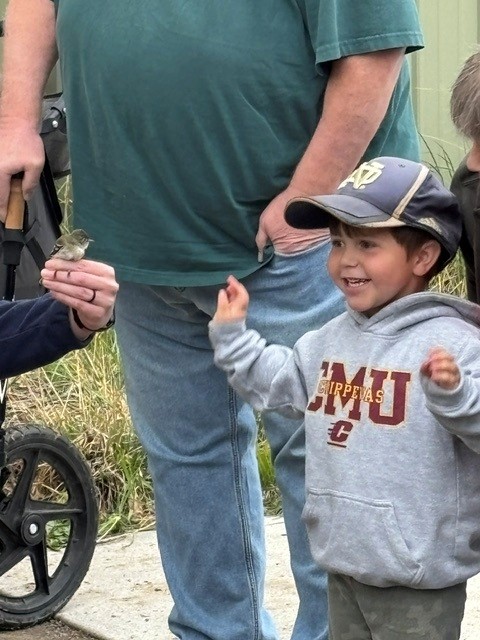 A young audience member gets excited to see a Least Flycatcher up close!
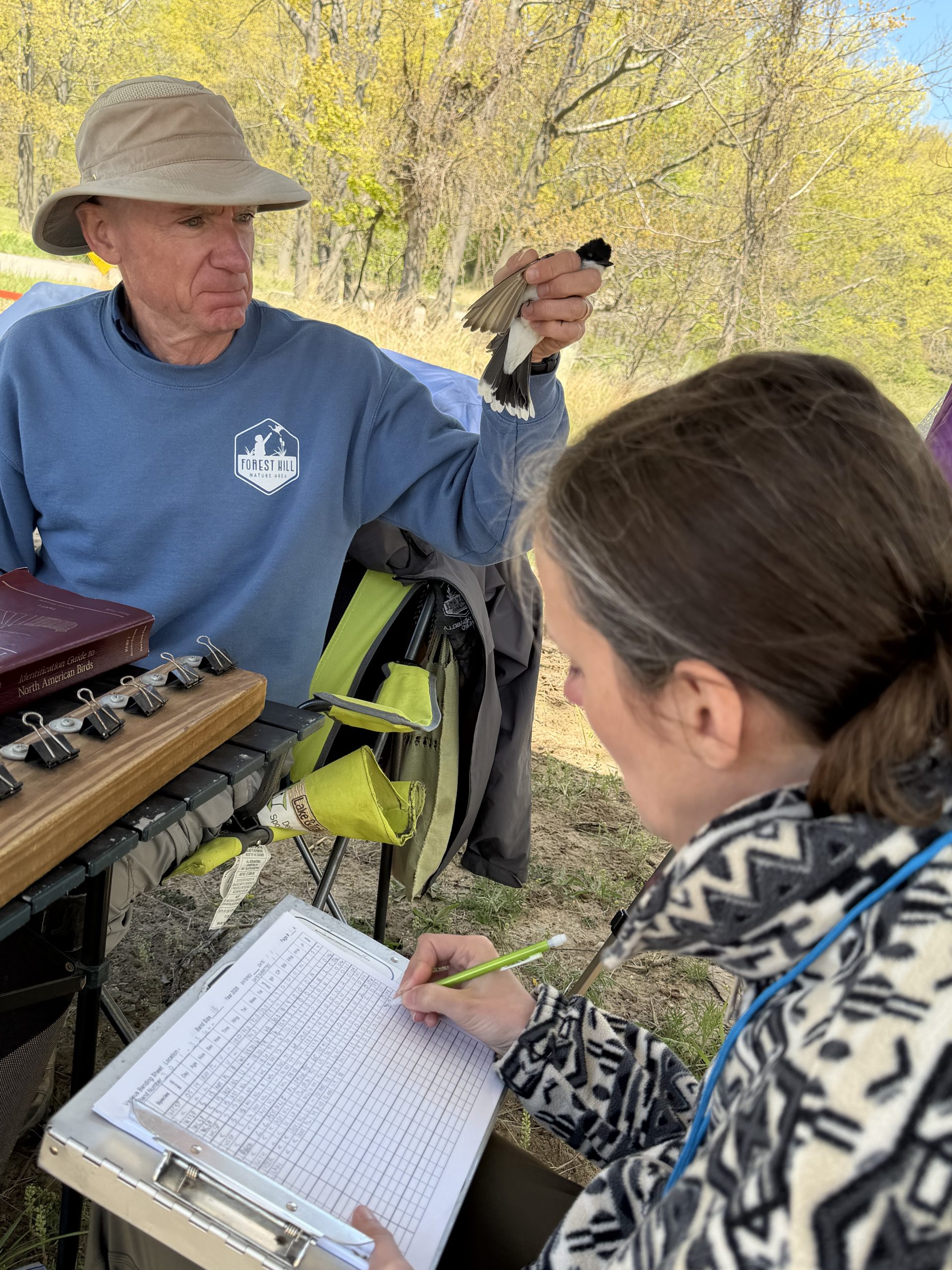 Master Bander Mike Bishop processes an Eastern Kingbird while volunteer Emily Tornga records the data.
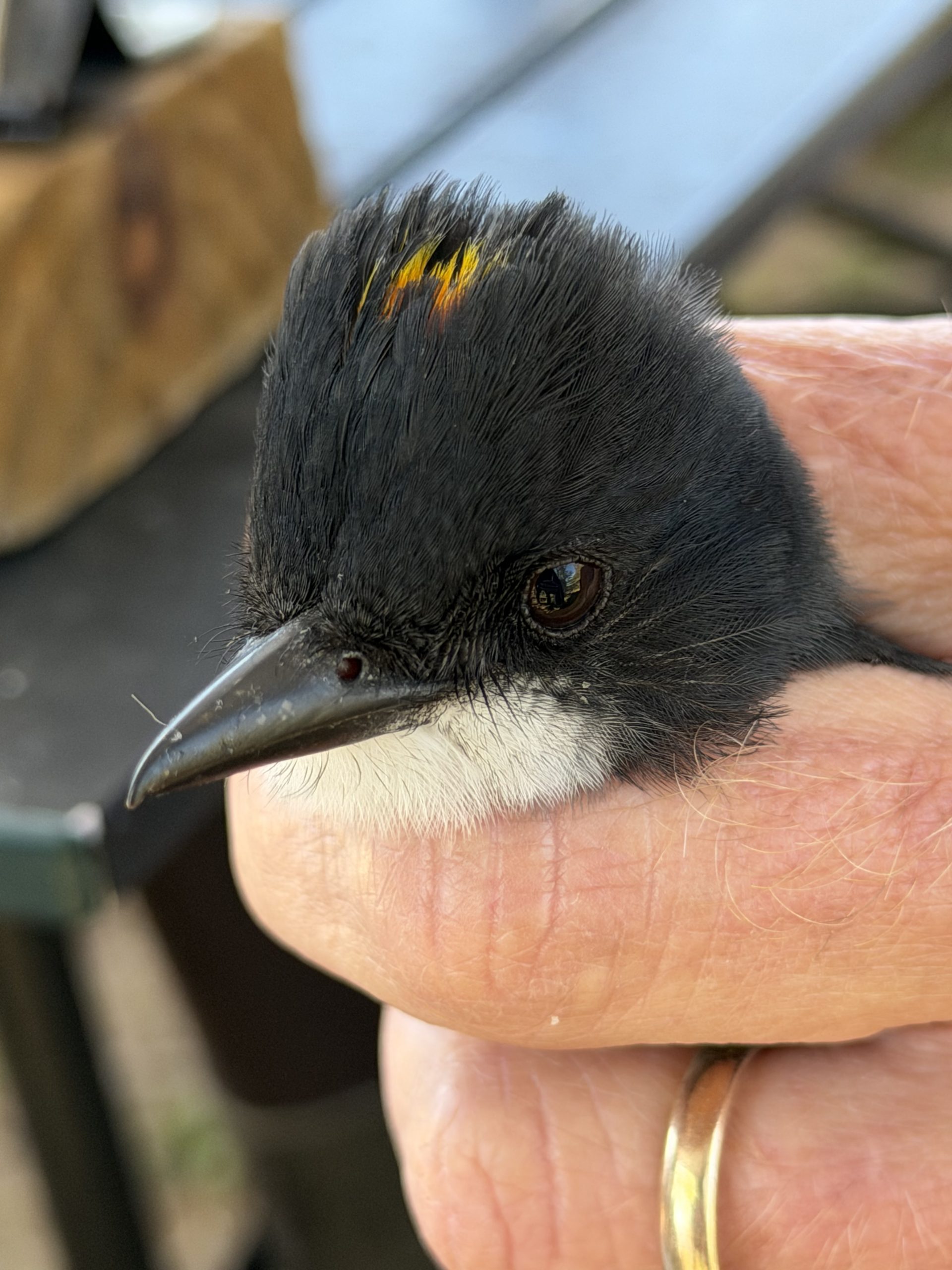
Eastern Kingbirds up close. Note the normally hidden yellow crown!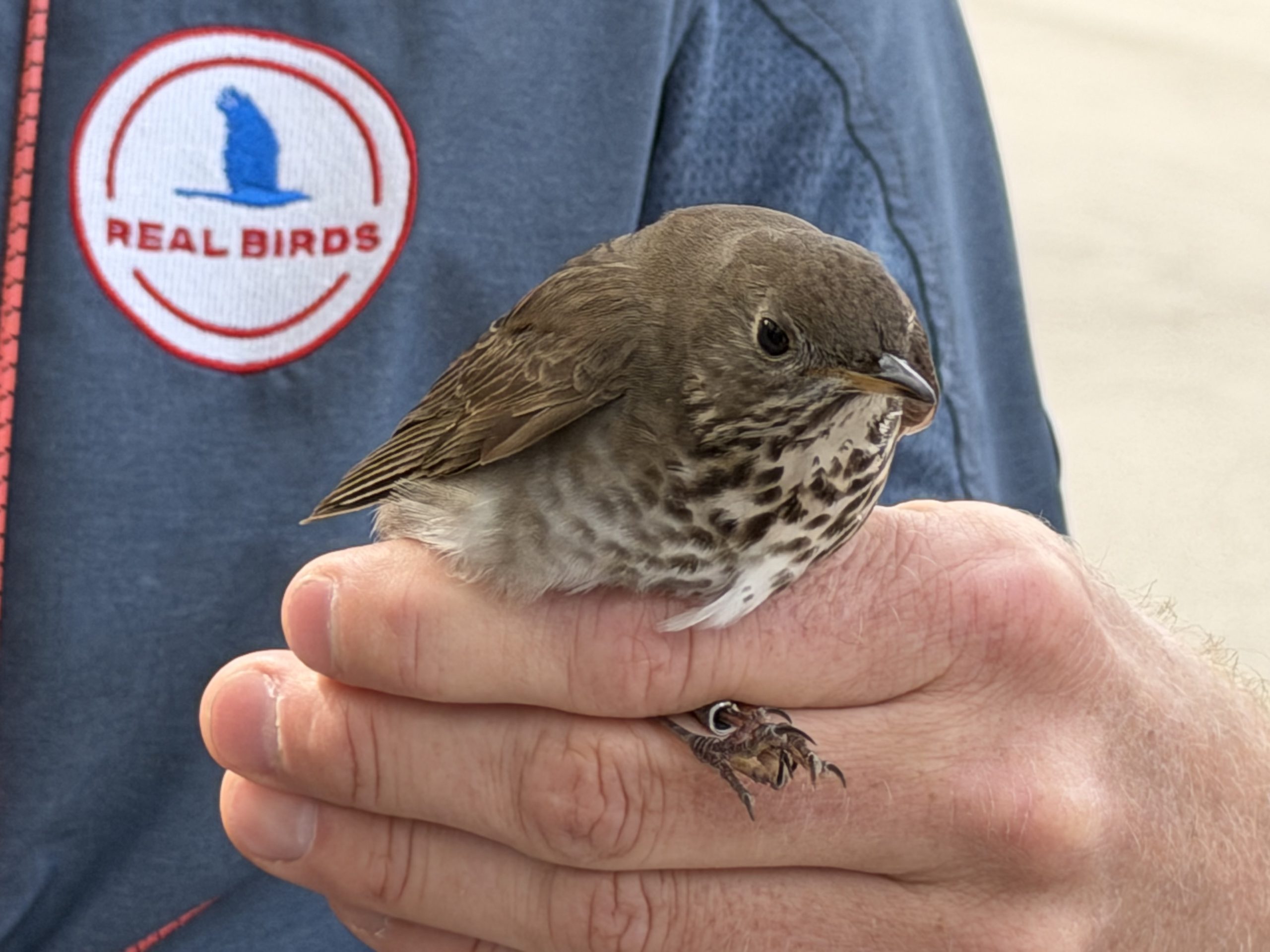 Gray-cheeked Thrush held by Caleb Putnam
September 27, 2025 – Banding Event
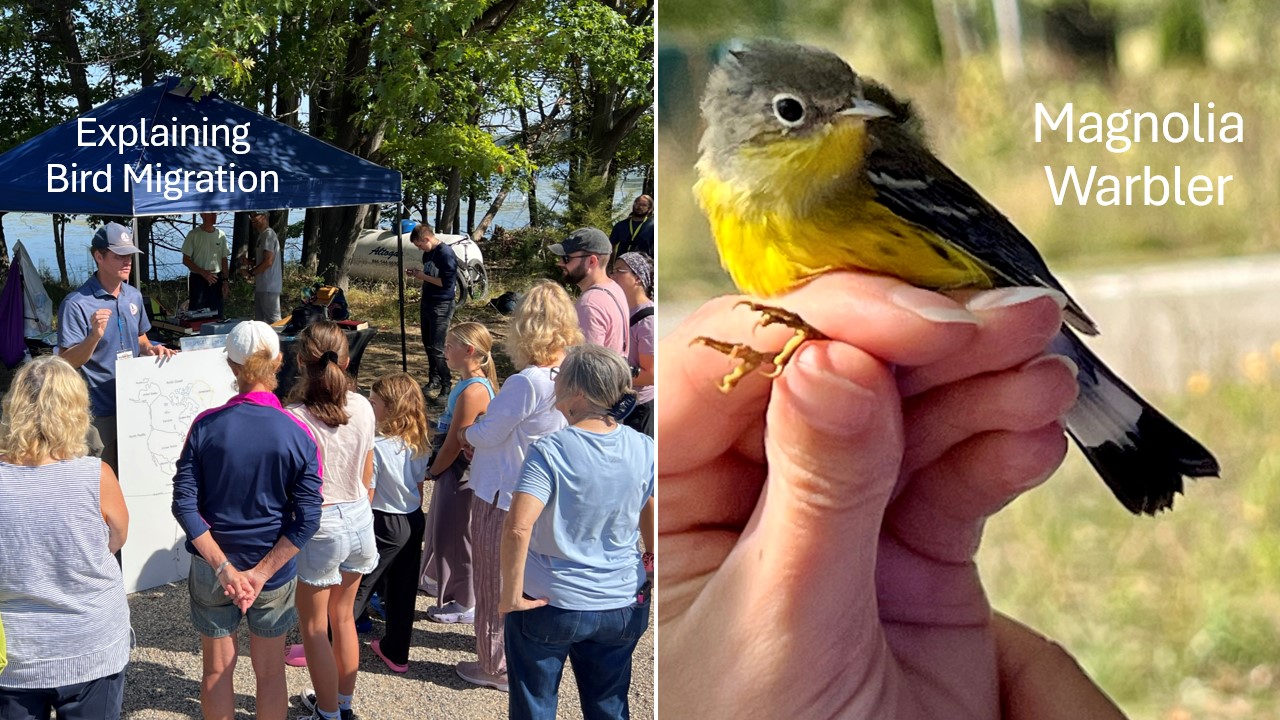
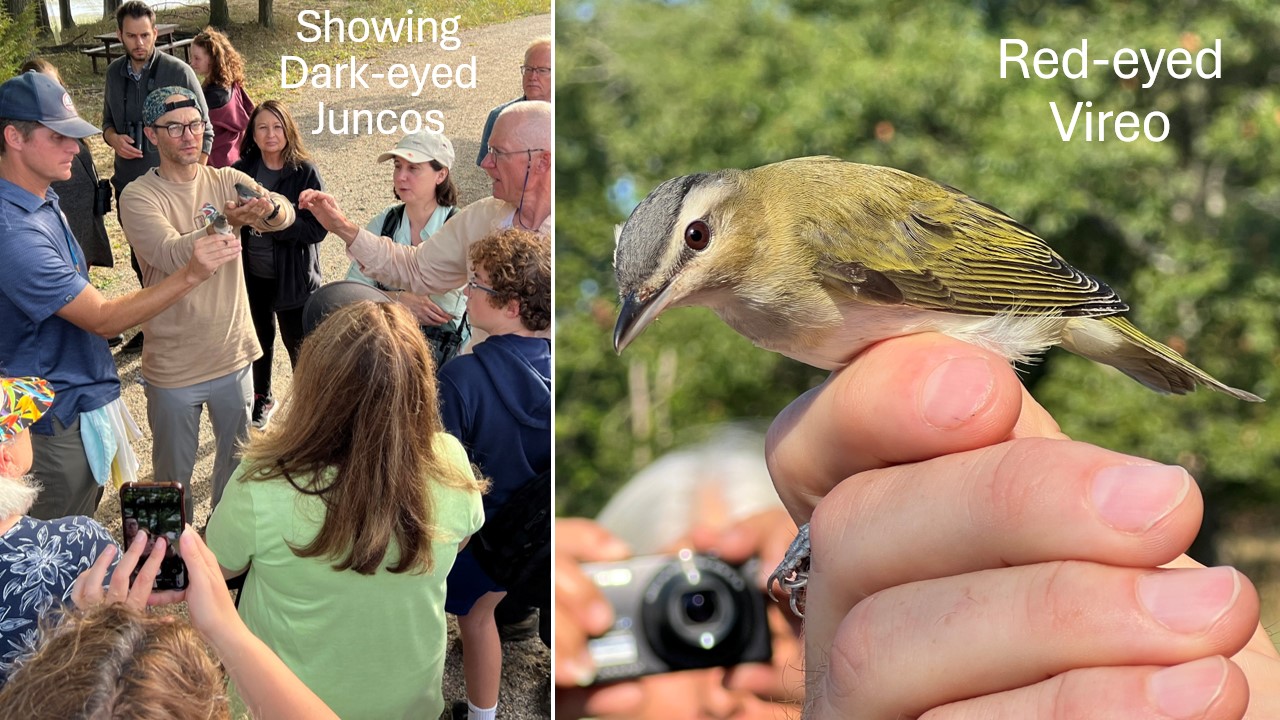
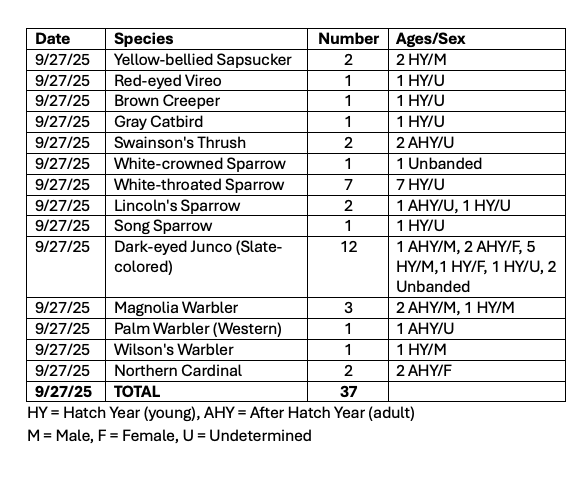
A full crew of volunteers and banders functioned like a well-oiled machine, and we banded 37 birds! Most were caught during the earlier runs of the day, but we managed to keep up without needing to close all of the nets. A total of 108 people enjoyed seeing the birds and interacting with staff and volunteers, who showcased the birds and spoke about the banding process, bird migration, and more. A favorite capture of the day was one of the latest captures, a Brown Creeper! We got an up-close look at its beautiful camouflage plumage, long curved toenails, and stiff tail, perfect for climbing trees.
September 6, 2025 – Banding Event
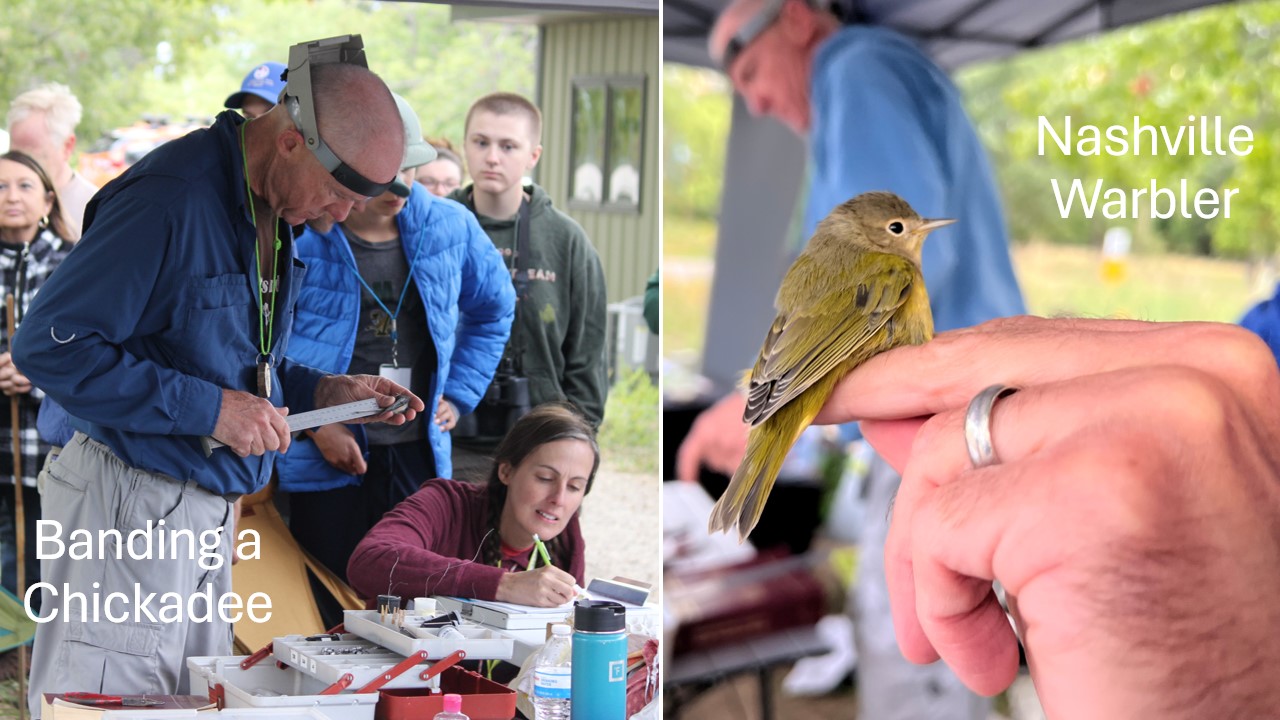
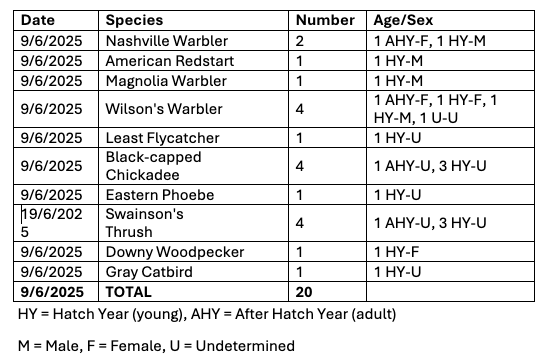
Volunteers met in the early morning to set up and open the nets, and were rewarded with a beautiful sunrise over the Sag! The first few “net runs” yielded plenty of birds, keeping everyone busy and giving the public a chance to see several species up close. At one point, we closed the nets temporarily so we could catch up on processing all the birds! The afternoon slowed down a bit, as expected. Overall, we had 100 people visit the Banding Station and we captured a total of 20 birds. Check the chart for details. All in all, it was a successful day for Ottawa County Parks’ first Bird Banding Event!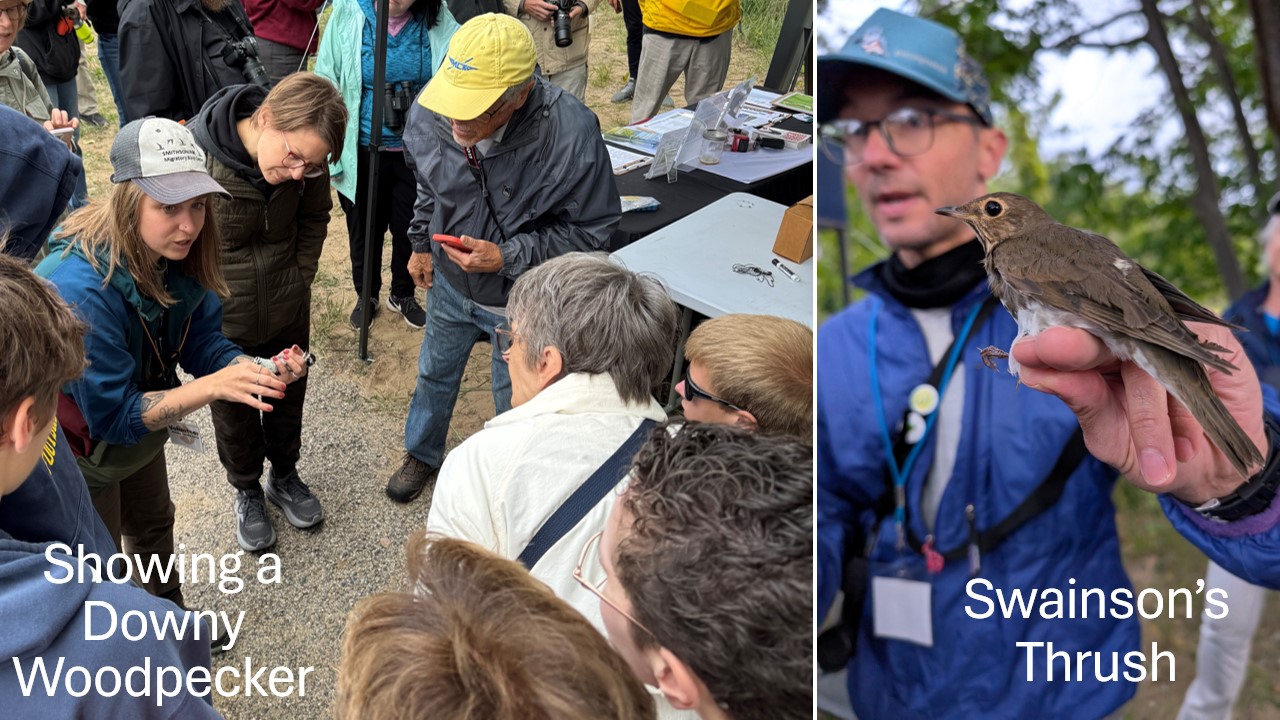
September 5 & 26, 2025 – Volunteer Training
September 6 – The evening before our first public event, we gathered our incredible team of volunteers for training. We went over logistics, how to assist with the banding process, and how to engage and educate the public. Without them we would not be able to pull off what we did! Although the evening was windy and bird activity was low, we did manage to catch and band one Brown Thrasher, giving everyone a firsthand look at the process. Ready or not (we were!), our first event was the following morning!
September 26 – Caleb Putnam and I led a second training for volunteers. We went over protocols and logistics again for how to make the event a success.
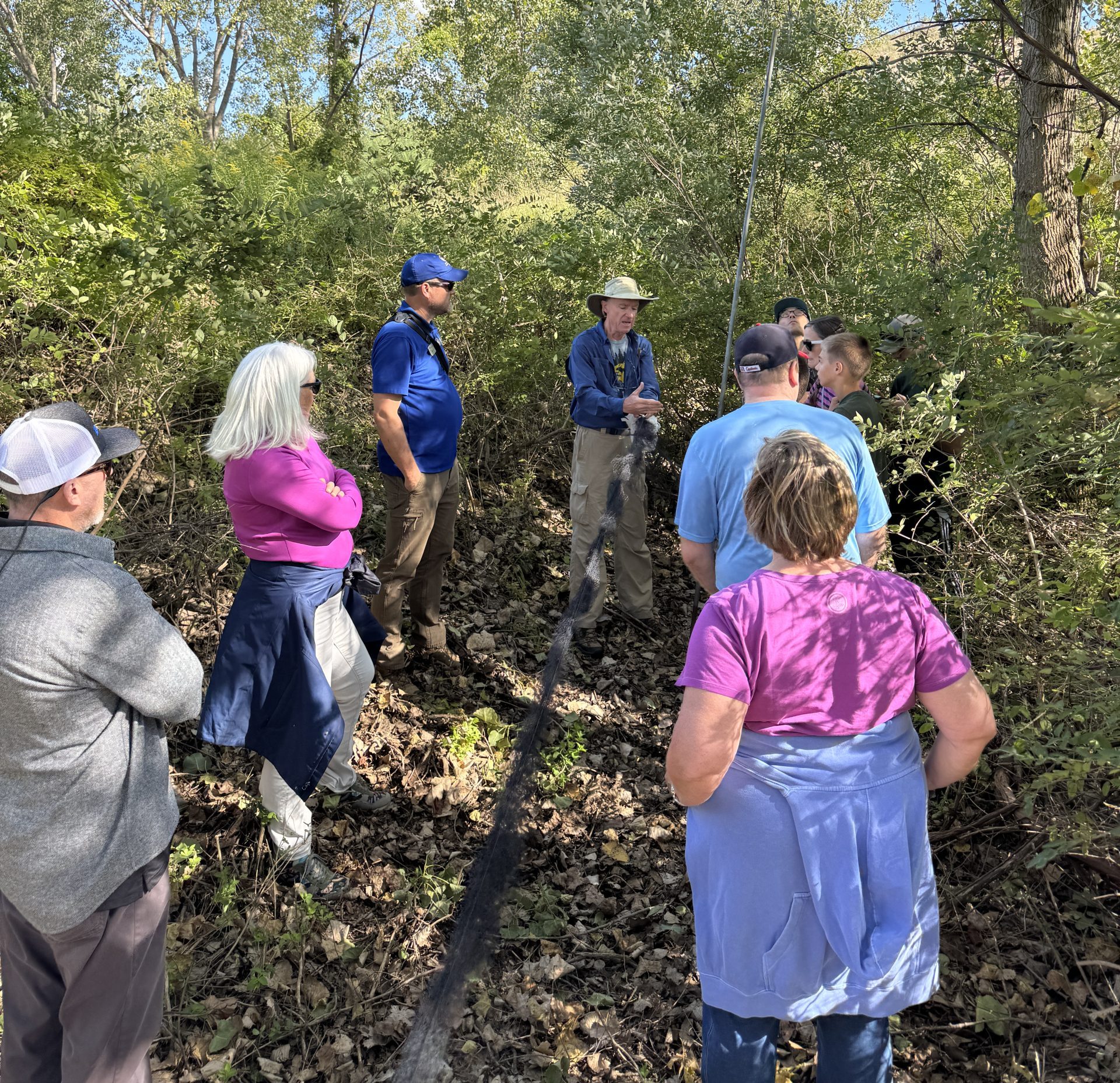
Volunteers learn about netting procedures from Master Bander, Mike Bishop.
August 4, 2025 – Test Banding & Final Lane Prep
On our second workday, we were joined by volunteer bander Laura Hulbert, who generously offered her expertise to help get the program off the ground. We tested the three lanes we had already established and were thrilled to make our first successful catches! Our initial banded birds included American Goldfinches, Gray Catbirds, Downy Woodpecker, Yellow Warbler, and Northern Cardinals.
After the excitement of the test run, we got back to work clearing and preparing three additional lanes. By the end of the day, all six lanes were ready for action. A dip in 50-degree Lake Michigan afterward was painfully refreshing!
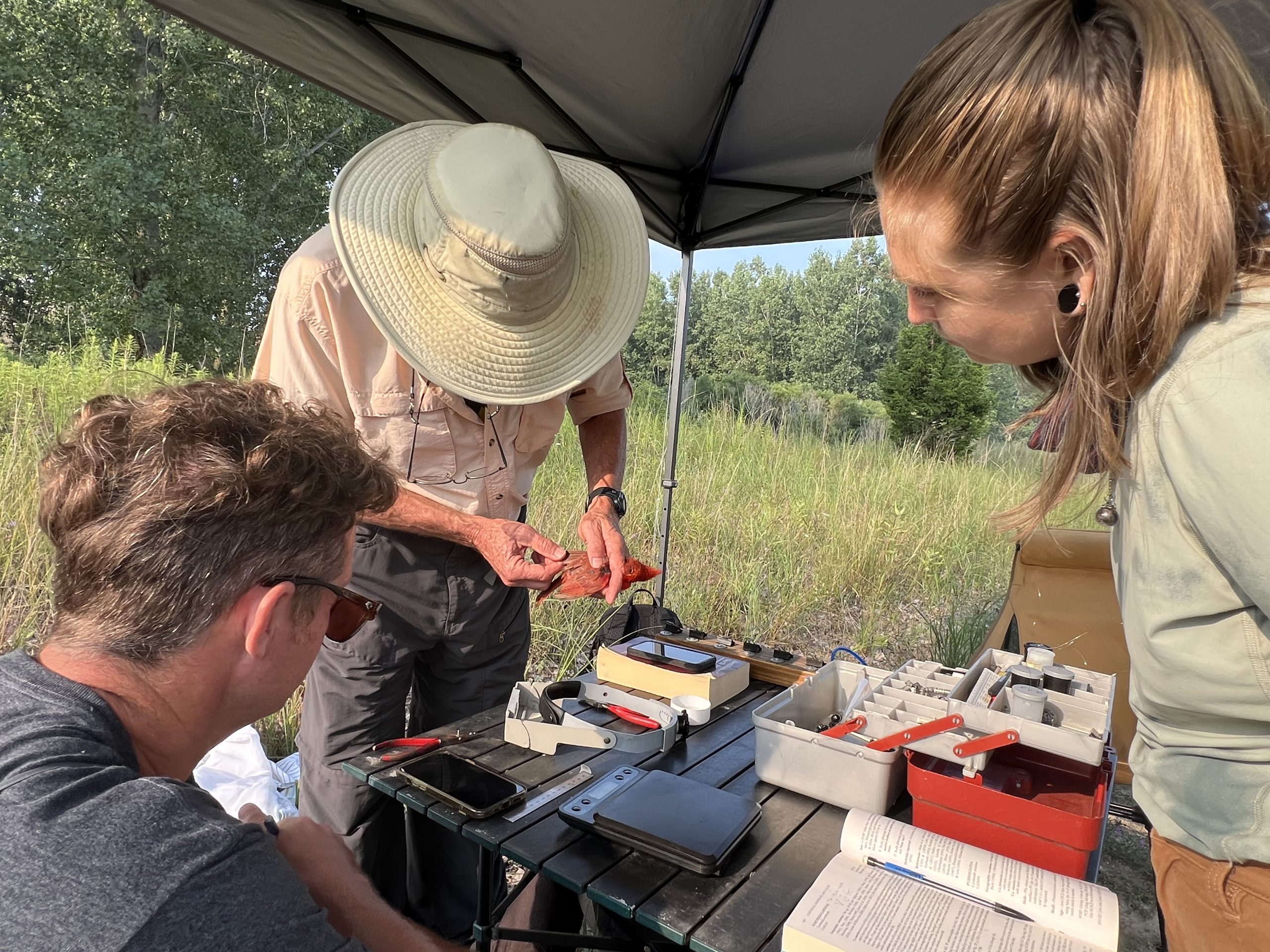
Master Bander Mike Bishop, along with Caleb Putnam and Laura Hulbert, takes measurements of a Northern Cardinal.
July 22, 2025 – Scouting & Lane Clearing
Caleb, Mike, and I met on-site at Ottawa Sands to select locations for the banding lanes. Using power trimmers, pruners, along with some blood, sweat, and tears, we carved out three net lanes through dense walls of brush. Once cleared, we installed poles and fitted the nets.
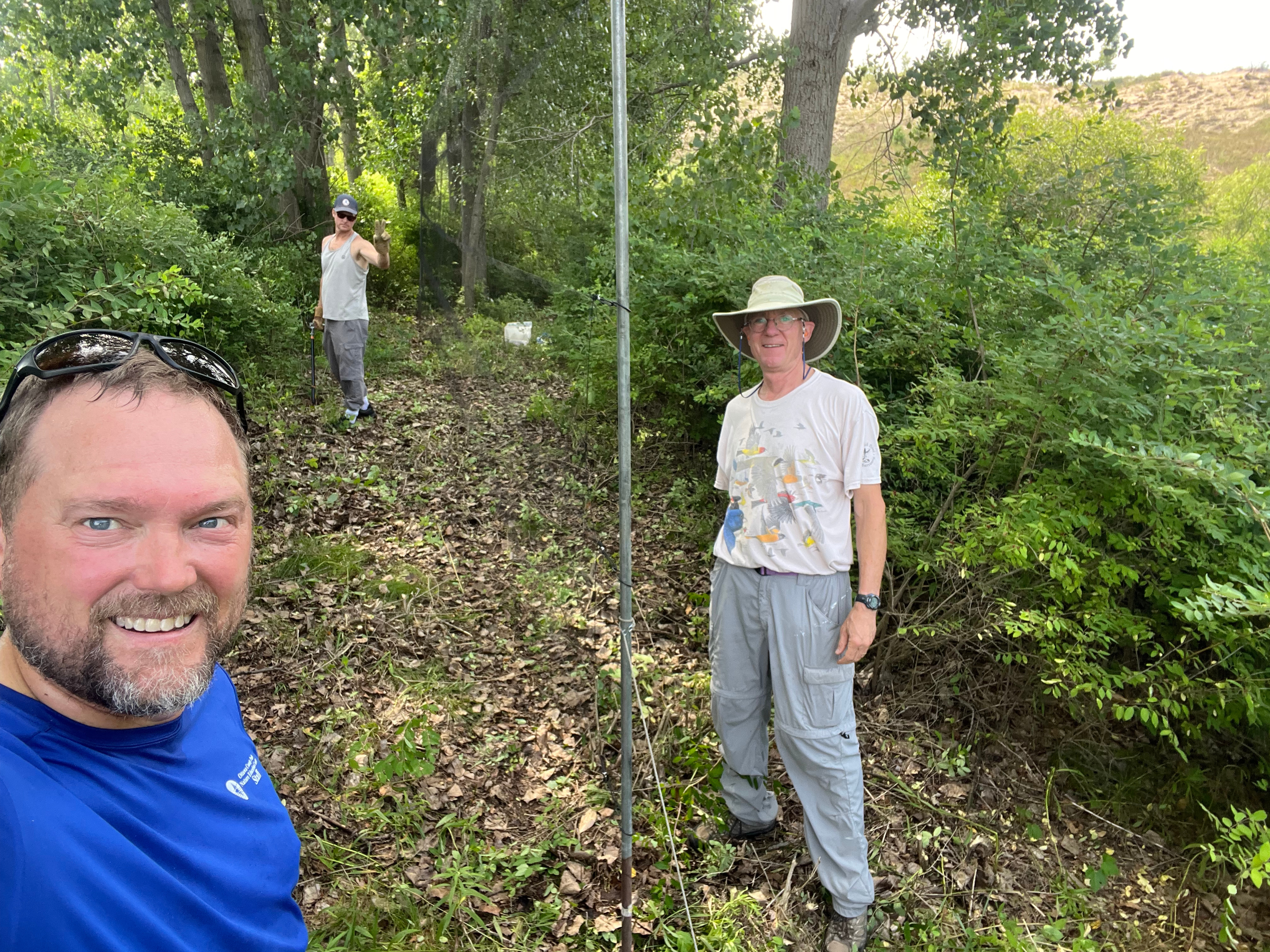
Mike, Caleb, and Curtis clearing a lane.
Bird Banding Beginnings
Ever since I first became interested in birds, bird banding has fascinated me. Years ago, while working in North Carolina, I had the opportunity to assist with capturing and banding Henslow’s Sparrows alongside the U.S. Fish and Wildlife Service. I also volunteered at a local banding station and attended banding events at Kiptopeke State Park in Virginia during fall migration. These experiences deepened my interest in this conservation practice.
So, when longtime friend and ornithologist Caleb Putnam approached Ottawa County Parks with the idea of hosting public bird banding events, we jumped at the opportunity. After several discussions and the necessary approvals, the plan was set: we would establish six banding lanes at Ottawa Sands County Park, with Caleb operating under the federal banding permit of Mike Bishop, an experienced bander and friend of Caleb’s from Alma, Michigan.
With the vision in place, it was time to prepare.
Click here to view more photos from the events.