
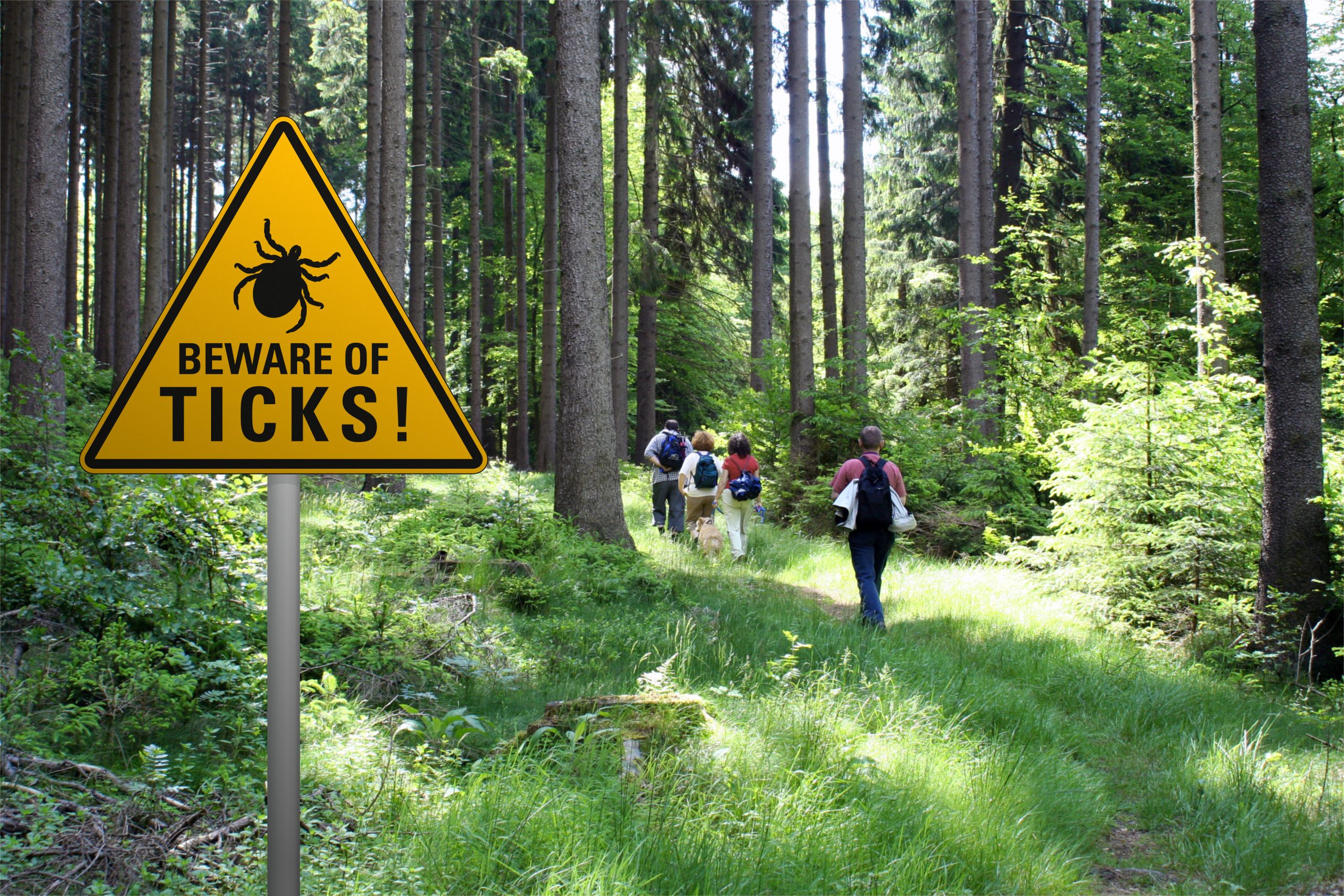
Now that summer is here, we all need to be on the lookout for ticks—which become most active when the weather is above 40 degrees. Ticks can spread diseases when they bite other animals or humans by spreading germs that cause a variety of infections, including Lyme disease.
Lyme disease, which can cause fever, headache, fatigue and a rash, can be successfully treated with antibiotics. If not properly treated, it can spread to joints, the heart and the nervous system. As of April 2023, there have been four reported cases of Lyme disease in Ottawa County.
Most humans are infected with Lyme disease through the bite of a blacklegged tick, also known as a deer tick. Deer ticks live in shady, moist areas clinging to tall grass, brush and shrubs, usually no more than 18-24 inches off the ground. Ticks also live in lawns and gardens, especially at the edges of woods and around old stone walls.
Lyme disease can be prevented by taking steps to prevent tick bites. Here are some things you can do to protect yourself, your loved ones and your furry friends from tick bites while you enjoy the natural beauty of Ottawa County.
When you are outside:
- Use bug repellent spray containing DEET and tick prevention products on pets.
- Treat clothing and gear (boots, pants, socks, and tents) with insecticide products containing 0.5% permethrin.
- Wear long pants in areas where ticks might be. Tuck pant legs into socks.
- Don’t walk where ticks might be waiting for you. Walk in the center of trails and avoid wooded and brushy areas with high grass and leaf litter.
- Create tick-safe zones in your yard. Keep patios and play areas away from vegetation; regularly remove leaves, and clear tall grasses and brush from around the house; place wood chips or gravel between lawns and wooded areas; and consider using a chemical control agent in the yard.
After you come in:
- Do a full body “tick check” on yourself and your pets. Look closely. Check behind knees, around waistbands and in the hairline—ticks can hide. Use a mirror or a buddy. Most ticks are about the size of a sesame seed, but young ticks, called ‘nymphs,’ can be as small as a poppy seed. Ticks can ride home on people, animals, and gear, and then attaching later.
- Bathe or shower after being outside.
- Place clothing in the dryer on high heat to kill any ticks.
- If you spot a tick, use fine-tipped tweezers to grasp the tick as close to the skin’s surface as possible. Pull upward with steady, even pressure. Don’t twist or jerk the tick; this can cause the mouth parts to break off and remain in the skin. Clean the area with rubbing alcohol, an iodine scrub, or soap and water.
- If you think you’ve been bitten by a tick, watch for symptoms of Lyme disease, and if you develop symptoms, contact your healthcare provider right away.
Warning sign “beware of ticks” in infested area in the green forest with walkers