
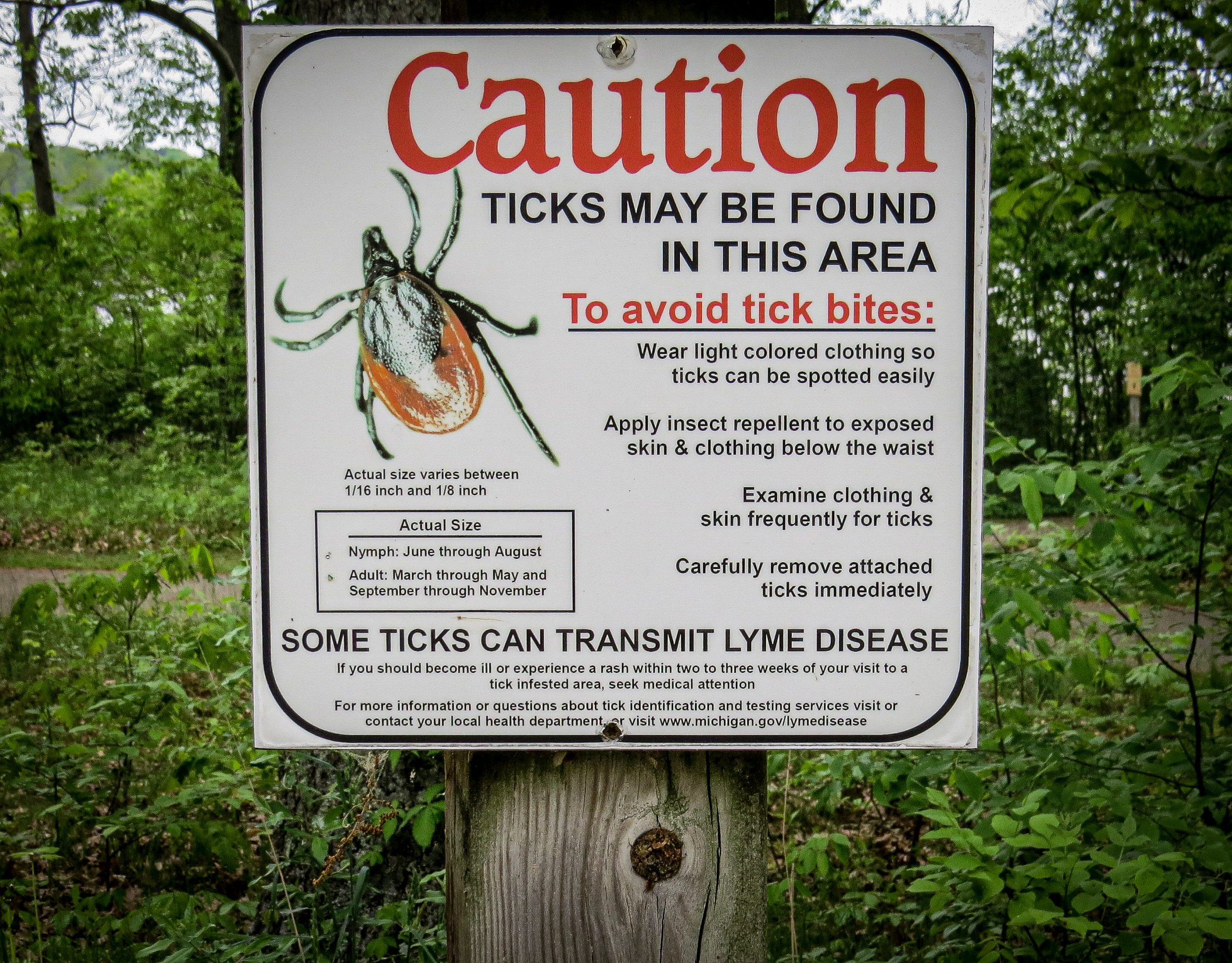
With warmer weather comes more time outdoors and increased tick activity across Ottawa County. While most tick bites are harmless, some ticks can transmit serious diseases like Lyme disease.
Ticks spread disease through their bites. Not every tick carries disease, but it is important to take prevention seriously, especially during spring and summer when ticks are most active. The good news is that these illnesses are preventable. By taking a few simple precautions, you can protect yourself and your family while still enjoying everything our parks and trails have to offer.
How to Prevent Tick Bites
When You’re Outdoors
- Use a repellent with DEET, picaridin, or oil of lemon eucalyptus on skin and clothing
- Treat clothing and gear with permethrin
- Wear light-colored, long sleeves and pants when in wooded or grassy areas. Tuck pants into socks.
- Stay in the center of trails and avoid tall grass while visiting parks.
- Create tick-safe zones in your yard. Keep patios and play areas away from vegetation; regularly remove leaves, and clear tall grasses and brush from around the house; and consider placing wood chips or gravel between lawns and wooded areas.
Check for Ticks After Being Outside
Ticks can be very small, so it is important to check carefully after spending time outdoors, even in your own yard.
- Conduct a full body check upon return from potentially tick-infested areas, including your own backyard
- Check these parts of your body and your child’s body for ticks: under arms, in and around ears, inside belly button, back of knees, in and around hair, between legs, around waist
- Ticks can ride home on clothing and pets, then attach to a person later, so carefully examine pets, coats, and daypacks
What to Do if You Find a Tick
If you find a tick attached to your skin, remove the tick as soon as possible. Do not wait to go to a healthcare provider to remove the tick.
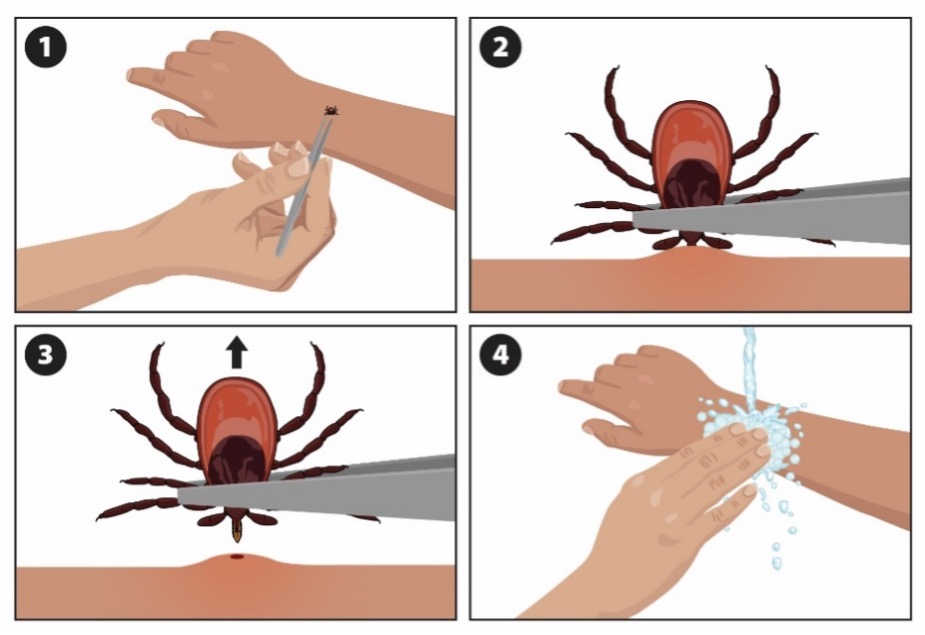
Safe Tick Removal
- Grasp the tick as close to the skin’s surface as possible using clean fine-tipped tweezers
- Pull tick away from the skin with steady, even pressure. Don’t twist or jerk the tick. This can cause the tick mouthparts to break off and remain in the skin. If this happens, don’t panic! Your body will naturally push the mouthparts out over time as your skin heals. Sometimes, you can pull mouthparts that break off in your skin out with tweezers, but if you cannot, leave them alone.
- Dispose of the live tick.
- After removing the tick, thoroughly clean the bite area and your hands with soap and water.
- Do a careful tick check on yourself to ensure there are no other ticks on you
- Take a picture of the tick so that, if needed, you can show it to your healthcare provider to help determine which type of tick bit you and whether you may need antibiotics. Expert tick identification is available for Michigan residents for free through MDHHS. You can either email a picture of the tick to MDHHS-Bugs@michigan.gov or you can mail the tick to the MDHHS for identification. Visit www.michigan.gov/lyme for more information.
When to Seek Medical Care
Most tick bites are painless and only cause minor symptoms such as a change in skin color, swelling, or a sore on the skin. Depending on your symptoms, you may not need to seek medical care for a tick bite. In general, to spread Lyme disease, a tick needs to be attached to a person’s skin for at least 36 hours. A good way to determine how long a tick has been attached is to look at how engorged it is. 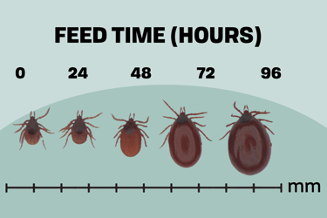 You should seek medical care if:
- You can’t completely remove the tick.
- You develop a rash. A small bump may appear at the site of the tick bite. This is normal. However, if the rash gets larger or you develop a rash anywhere else, possibly with a bull’s-eye pattern, it may be an early sign of Lyme disease. This rash normally appears within 3 to 14 days of the initial bite.
- You experience flu-like symptoms such as fever, fatigue, or headache
- The bite appears infected
- You believe it was a blacklegged tick
Understanding Lyme Disease
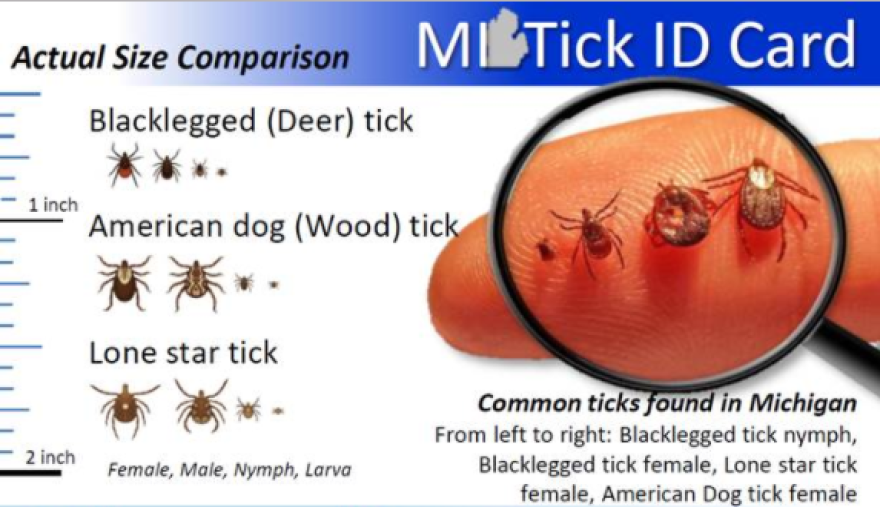
Lyme disease is caused by Borrelia bacteria spread to people by the bite of an infected blacklegged tick. Lyme disease is the most common vector-borne disease in the United States. Most humans are infected through the bites of immature ticks called nymphs that feed during the spring and summer months. Nymphs can be difficult to see since they are approximately the size of a poppy seed. In most cases, the tick must be attached for less than 24 hours or more before the Lyme disease bacterium can be transmitted. It is important to promptly remove a tick if one is attached to you.
Learn more about Lyme disease: https://www.cdc.gov/lyme/about/index.html