
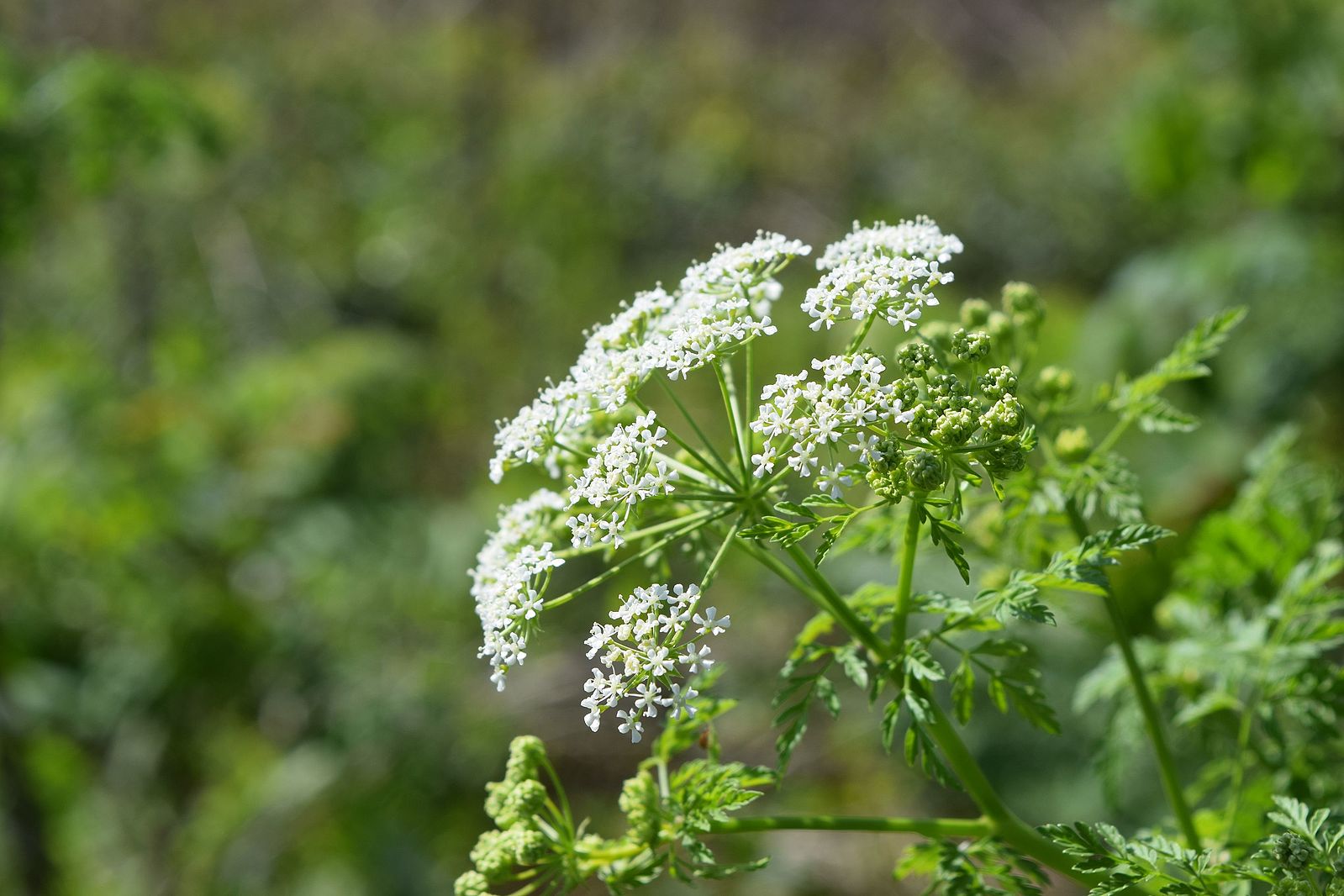
What is poison hemlock?
Poison hemlock is an invasive flower that was planted in gardens and is now spreading across Michigan. It lives only two years (biennial), but each plant can produce up to 38,000 seeds.
Is it dangerous?
Poison hemlock can be lethal if handled improperly. However, it is not hazardous to humans in our parks if the following rules are followed:
- Stay on the trail
- Keep dogs on leash
- Supervise small children in areas with poison hemlock
Poison hemlock is highly toxic if eaten. Unlike poison ivy, casual contact is not harmful. Injuries and potentially death could happen if it is:
- Eaten
- Inhaled (by burning, weed whipping etc.)
- Hand pulled without proper protection (long-shirt, gloves, mask, eye protection)
Why isn’t OCPR managing for it?
OCPR is managing for it. For over a decade, OCPR has been attempting to eradicate poison hemlock through known best management practices, with little success. Poison hemlock is a very difficult invasive species to manage, especially because it is widespread in the region. Therefore, it is constantly being introduced to parklands. Here is how OCPR is managing for poison hemlock:
- Early detection/rapid response (EDRR) – The most cost-effective method, that has the best chance of success, is EDRR. OCPR staff monitors its parks for new invasive populations, especially poison hemlock. When found, OCPR staff removes the plant before it goes to seed. Unfortunately, if poison hemlock is found, that site typically gets reinfested because it is likely along a road or river where new seeds continuously enter from vehicles or flooding.
- Mowing – In areas with a lot of poison hemlock, OCPR staff mow trails extra wide to prevent the tall plants from falling into the trail. This can be a challenge since poison hemlock often grows along rivers where trails are flooded or too muddy in the time poison hemlock needs to be mowed.
- Herbicide treatments – Treating poison hemlock with herbicides is the best option for larger, dense populations such as at Paw Paw Park and Upper Macatawa Natural Area. Unfortunately, OCPR has had little to no success with herbicide applications. This is likely due to the fact that the soil is full of poison hemlock seeds. Once an individual is killed, there are thousands of seeds ready to germinate and take its place. Also, especially along the rivers, new seeds arrive with each flood.
How can I get rid of it?
Because poison hemlock is a significant threat to livestock, state extensions are a great resource for accurate information for its management. Here are a few websites with more information:
Poison hemlock identification and control – Agriculture (msu.edu)
Poison Hemlock | BYGL (osu.edu)
Identifying poison hemlock
Leaves are bright green, fern-like, finely divided, toothed on edges and have a strong musty odor when crushed. Flowers are tiny, white and arranged in small, umbrella-shaped clusters on ends of branched stem. Poison-hemlock stems have reddish or purple spots and streaks, are not hairy, and are hollow.
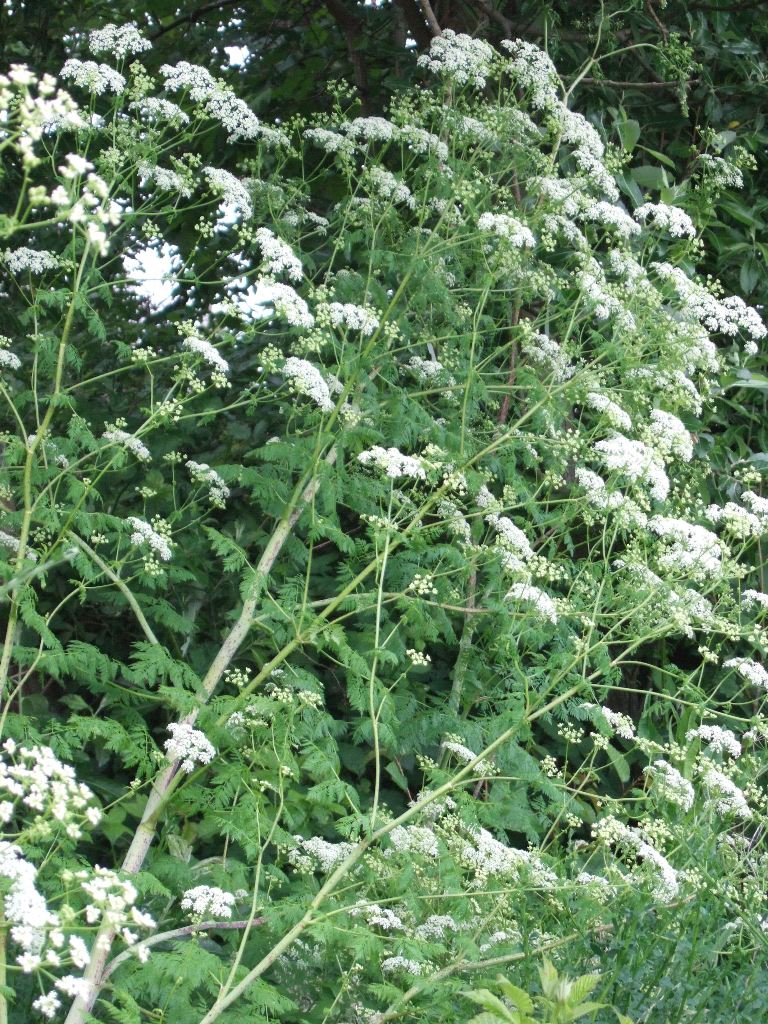
Image from https://kingcounty.gov/services/environment/animals-and-plants/noxious-weeds/weed-identification/poison-hemlock.aspx
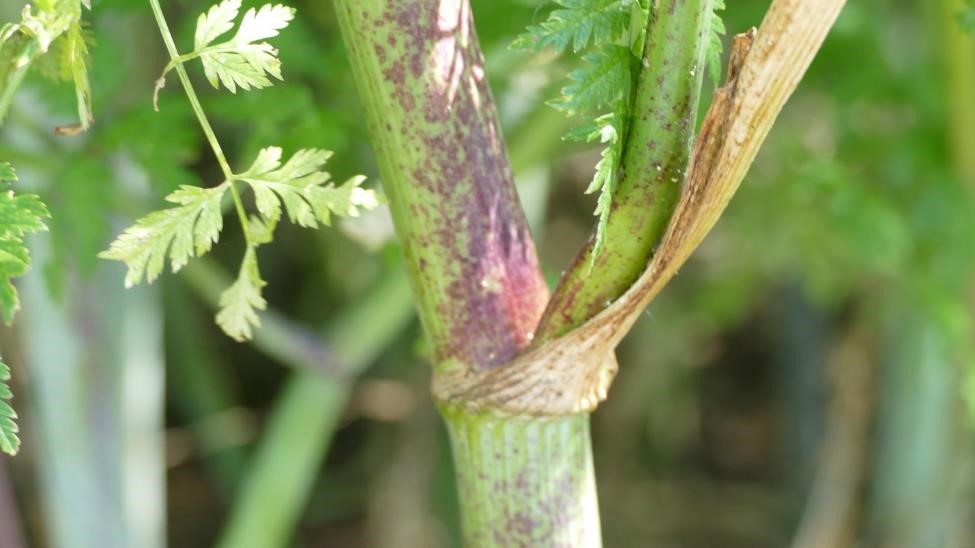
Purple spotting on smooth, hollow stems is a tell-tale sign of poison hemlock. Photo by Eric Anderson, MSU Extension: https://www.canr.msu.edu/news/poison-hemlock-identification-and-control
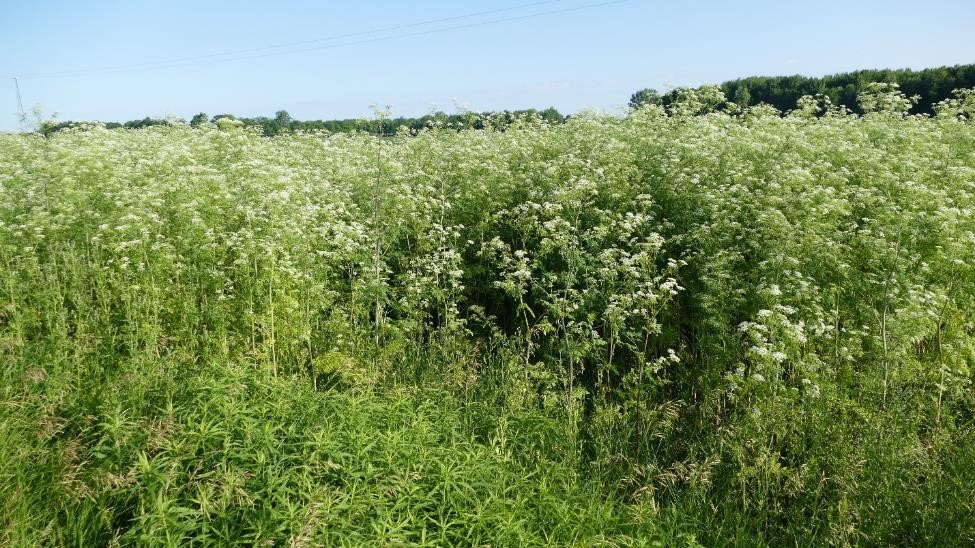
It’s hard to tell from this picture, but these plants are over 8 feet tall, an indicator this is poison hemlock and not wild carrot. Photo by Eric Anderson, MSU Extension: https://www.canr.msu.edu/news/poison-hemlock-identification-and-control
For more identification tips, visit: https://www.canr.msu.edu/news/poison-hemlock-identification-and-control
***
Fox 17 Interview with Natural Resources Manager
.