
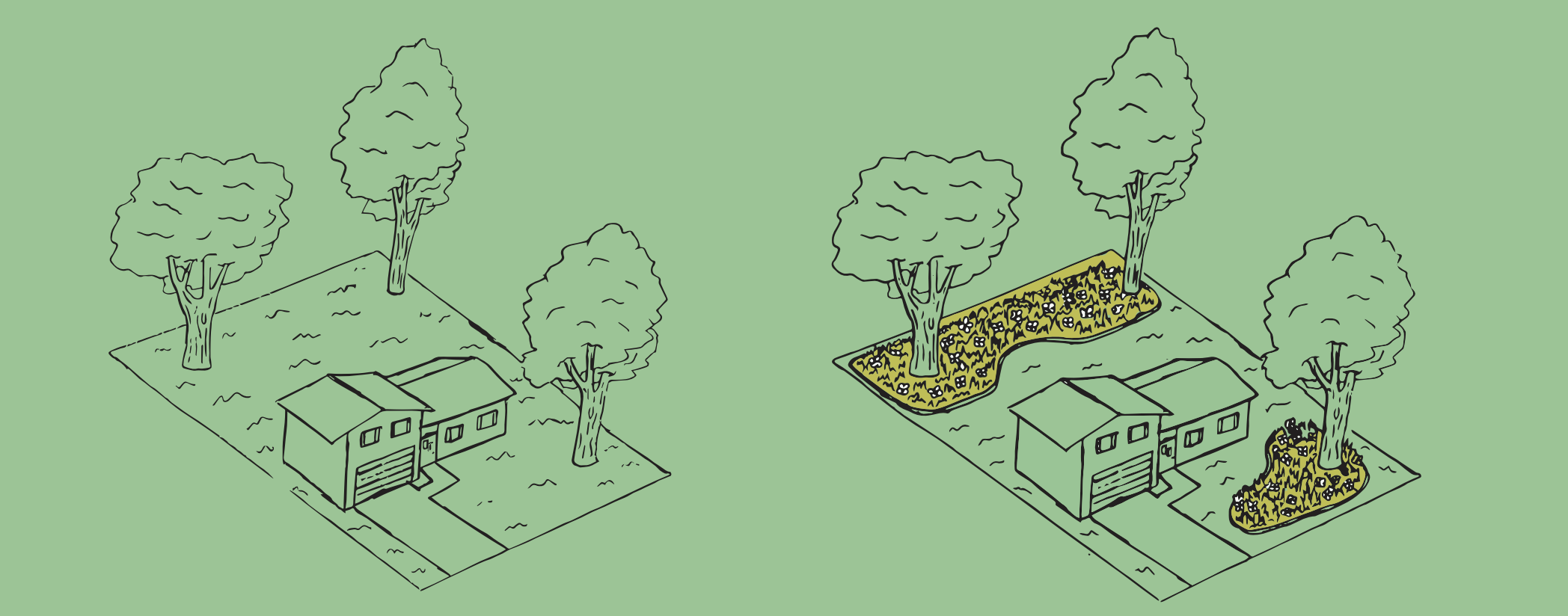
Summer is the season of outdoor barbecues, the sound of children splashing in inflatable pools, and the smell of a freshly-mowed yard. Nothing is quite as ubiquitous as the American lawn – a vast, well-manicured plane of Bermuda or Kentucky bluegrass adorns the front of nearly every house in every subdivision of every city in the country. From suburban New Jersey to the mountainous foothills of Los Angeles, expansive grass lawns have become the primary feature of our built environment.
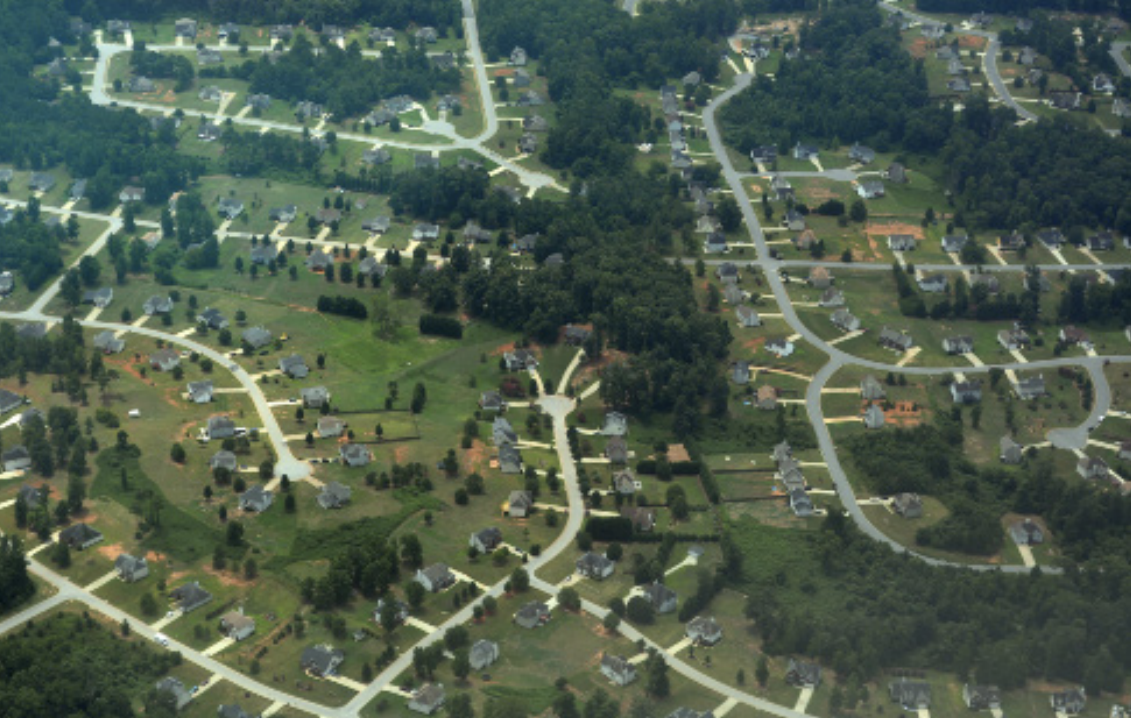
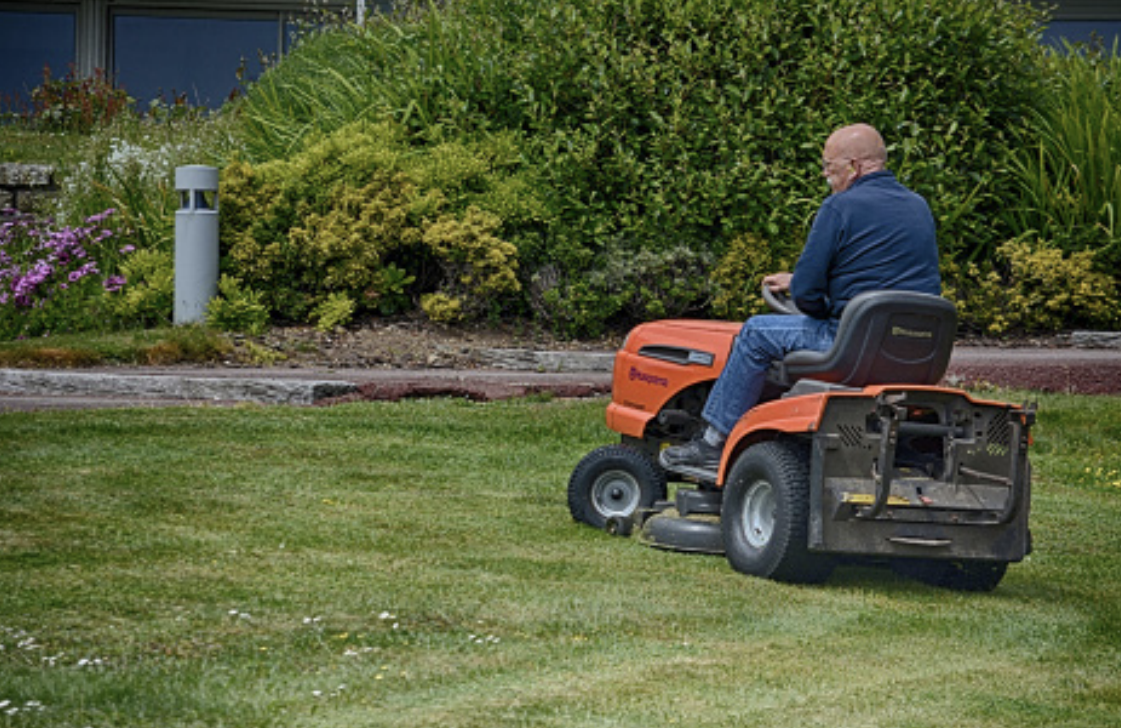
The United States has nearly 50,000 square miles of turf grass1, combined it would create a yard the size of Ohio or Pennsylvania. Mowing these thousands of square miles requires over 800 million gallons of gas annually2, with lawn mower emissions mixing with stagnant air to create harmful ozone and air pollutants. Each weekend, an estimated 54 million Americans mow their yards3, wiping away beads of sweat as they trim the blades of grass to a uniform height. Next weekend they’ll don their lawn sneakers, fire up the mower, and perform the ritual all over again.
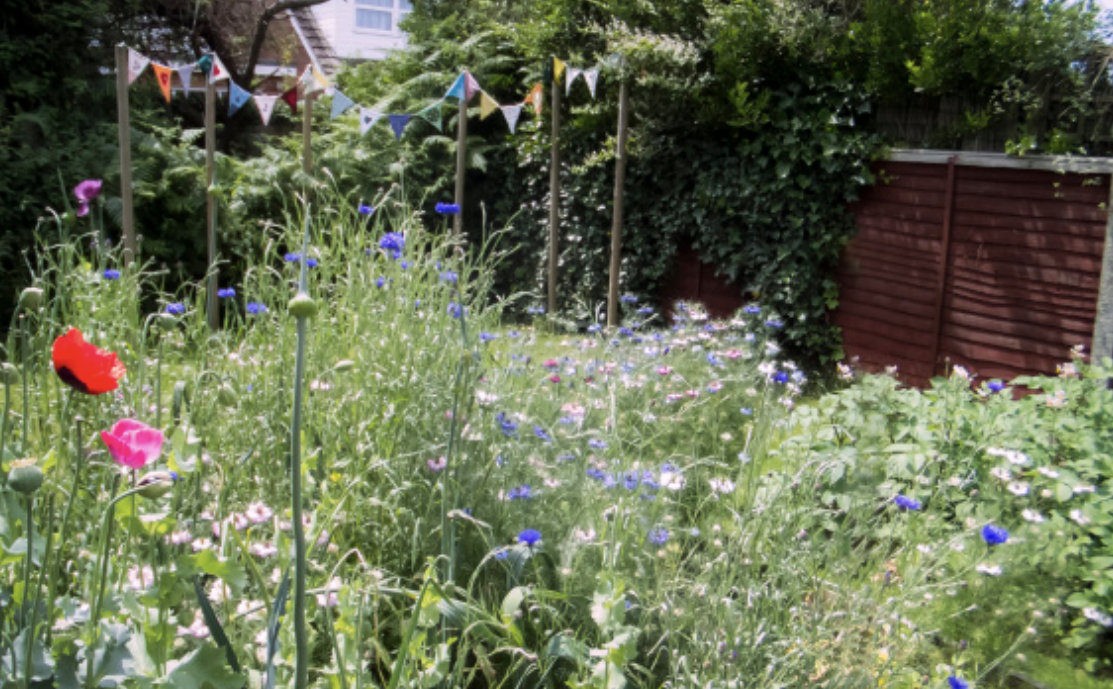
While the well-manicured grass lawn has been a near-constant fixture in our communities over the past century, many are revisiting its wide-ranging impacts in the face of habitat degradation, climate change, water consumption, and environmental pollution. With many people desiring more sustainable green spaces – fruit and vegetable gardens, pollinator flower patches, native grass meadows – landscape regulations must be flexible to account for these changing preferences. This article seeks to provide a brief overview of how grass lawns came to prominence, challenges associated with their widespread adoption, and opportunities to implement alternative landscapes. It’s our hope that these items offer unique considerations on turf grass and ways to empower residents to create environmentally healthy green spaces that enhance the community’s beauty.
Where Did Lawns Come From?
Prior to European settlement, North America featured native grassland prairies that stretched towards the horizon. Fields of bluestems, bottlebrush, Indian grass, and wildflowers native to Michigan inhabited oak savannas across the lower peninsula4. For thousands of years these species of grasses endured without irrigation or maintenance and provided important habitats for birds, rabbits, bees, and butterflies.
With the settlement of North America came drastic changes to these landscapes. Settlers came to Michigan throughout the 1800s, lumbering northern pine forests and converting former grasslands to agricultural production. During this period, the nation’s natural resources – a vast continent to be mined, hunted, fished, and deforested – were viewed as a force to be conquered and altered for human habitation5. This same thought translated to the emerging field of landscape design, where lawns were first implemented in the United States.
While Jefferson and Washington cultivated grass lawns at Monticello and Mount Vernon respectively6, it was Frederick Law Olmstead’s creation of Central Park in New York City and the development of Riverside, Illinois that prompted the rise of residential lawns. Non-native species were regularly incorporated in these designs, emulating the botanical gardens of Britain and France. Coupled with the Garden Cities movement of the early 20th century that sought to replace “crowded, unhealthy cities” with communities closer to nature7, the turf grass lawn became synonymous with wealth, clean air, and good living.
The creation of zoning ordinances establishing front and side setback regulations enshrined lawns into law. With policies encouraging suburbanization during the 20th century, millions of Americans moved into mass-produced houses featuring grass yards. Post-war prosperity and technological advances such as new pesticides and the rotary lawn motor quickly made lawncare a domestic pastime. These factors along with long-standing cultural views have ensured turf grass lawns remain the primary landscape feature even in the 21st century.
Where Are Lawns Going?
The typical grass lawn will likely remain a prominent fixture in our communities for the foreseeable future. Since its widespread adoption however, increased attention has been drawn to its harmful environmental impacts. Scientific understanding of habitat ecology, the effects of chemicals and pesticides, and local hydrologic systems has grown dramatically over the past century. Some of these challenges are discussed in detail below:
Loss of Habitat
Turf lawns represent a single species monoculture of grass. This homogenous landscape limits the number of species able to live in an area, reducing biodiversity. Bees, butterflies, and fireflies are experiencing declining populations due to habitat loss and pesticide applications as-sociated with turf grass cultivation8. Alternatively, native landscapes act as habitats for these species, providing the natural conditions needed to prosper.
Chemical Applications
Non-native turf grass species require extensive applications of pesticides and herbicides to maintain their emerald-green shimmer. Not only are these substances toxic to local wildlife populations, these chemicals seep into the soil, poisoning organisms needed for healthy, nutrient-rich soils9. Runoff from pesticides and herbicides also regularly enter water bodies10, creating algae blooms that threaten aquatic habitats and invaluable natural features.
Water Dependency
Due to their status as non-native to North America, common turf grass species require large quantities of water. Every day, the average household uses nearly 100 gallons of water to irrigate their lawn11. Including rainfall, a typical 4,000 square foot lawn in the Midwest can require over 44,000 gallons of water during the summer12. This is particularly harmful in Ottawa County, as subsurface geology inhibits recharge of the aquifers supplying irrigation water. To reduce the depletion of this vital water resource, native plantings that don’t require extensive irrigation can be allowed and encouraged through landscaping regulations.
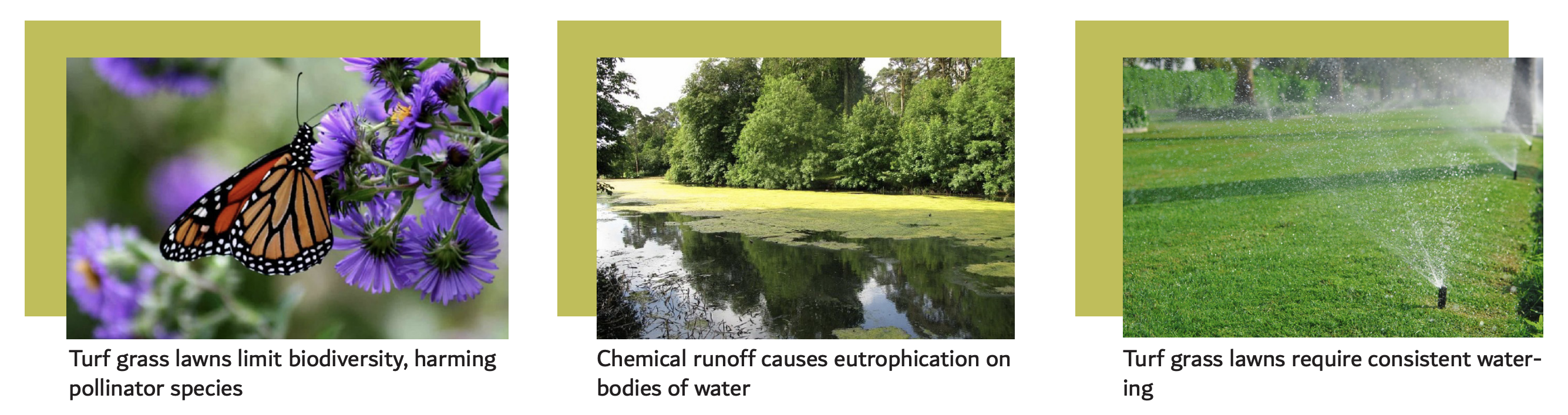
These factors along with a growing emphasis on sustainability are prompting many communities to seek ways to encourage native landscaping as turf grass alternatives. This can be accomplished through a landscaping ordinance that allows for appropriate native plantings.
Download the whitepaper prepared by the Department of Strategic Impact as a pdf
Ottawa Conservation District Native Plant Workshop
Join us on the evening of April 25, 2022 at the Nature Center to hear Wesley Landon speak about creating and maintaining manageable native gardens. Wesley is a licensed landscape architect whose passion is creating resilient, innovative places which inspire as well as restore the native environmental fabric of the landscape. This program is free, but registration will be required.
Ottawa Conservation District Native Plant Sale
The Ottawa Conservation Distrcit native plant sale offers a wide assortment of Michigan-grown native flowering plants, ferns, and grasses. Get started on your own native garden this spring! We recommend pre-ordering plants. Orders are due on May 2, 2022
You can find the following online at ottawacd.org
- Native Plant Catalog
- Online Store
- Order Form
- Price List
- Pickup Appointment Form
- Registration for Native Plant Workshop
Has the spring 2022 date passed? Don’t worry the Ottawa Conservation District hosts a plant sale twice each year (spring and fall).
Bibliography
- Milesi, C., Elvidge, C. D., Dietz, J. B., Tuttle, B. T., Nemani, R. R., & Running, S. W. (2005). A Strategy for Mapping and Modeling the Ecological Effects of US Lawns. The International Society for Photogrammetry and Remote Sensing.
- Osbourne, C. (2019, September 9). No Mow Days and Other Ways to Trim Your Grass and Your Emissions. Utah Department of Environmental Quality. Retrieved from https://deq.utah.gov/air-quality/no-mow-days-trim-grass-emissions
- Aguirre, E. L. (2012, May 24). Student Invents Solar-Powered Lawn Mower. University of Massachusetts – Lowell. Retrieved from https://www.uml.edu/news/stories/2011-12/solar-lawn-mower.aspx
- Sargent, M. S., & Carter, K. S. (1999). Managing Michigan Wildlife: A Landowner’s Guide. Michigan United Conservation Clubs.
- Wallace, M. G., Courtner, H. J., & Burke, S. (1996, November). Taming Nature: The Enlightenment’s Legacy for the Future? Journal of Forestry, 39-44.
- Potter, K. (2020, April 23). Beyond the Lawn: Rethinking America’s Most Wonderful, Ridiculous Monoculture. The Provincetown Independent. Retrieved from https://provincetownindependent.org/ farm-garden/2020/04/23/beyond-the-lawn/
- Howard, E. (1902). Garden Cities of Tomorrow. London, S. Sonnenschein & Company.
- Wernick, A. (2020, May 25). Here’s How to Convert Your Lawn into a Bee and Pollinator Habitat. PRI – The World. Retrieved from https://theworld.org/stories/2020-05-21/heres-how-convert-your-lawn-bee-pollinator-habitat
- Aktar, W., Sengupta, D., & Chwdhury, A. (2009, March). Impact of Pesticides Use in Agriculture: Their Benefits and Hazards. Interdisciplinary Toxicology, 2(1), 1-12.
- Environmental Protection Agency. (2019, February 4). Sources and Solutions. Nutrient Pollution. Retrieved from https://www.epa.gov/nutrientpollution/sources-and-solutions
- Environmental Protection Agency. (2013, May). Outdoor Water Use in the United States. Water Sense. Retrieved from https://www.epa.gov/sites/default/files/2017-03/documents/ws-factsheet-outdoor-water-use-in-the-us.pdf
- Minnesota Pollution Control Agency. (2008). Landscaping and Maintenance of Vegetation: From Policy to Reality. www.crplanning.com/_ordinances/landscaping.pdf